• Antarctica
  • Book Reviews
  • Economics and Taxation
  • Photographs
  • Political Commentary
  • Running
  • Science
  • Short Stories
  • Travel
  • About Richard Watson

Richard Watson

~ Commentary

Richard Watson

Author Archives: Richard Watson

The Right to be Heard

11 Wednesday Jun 2025

Posted by Richard Watson in Uncategorized

≈ Leave a comment

The Committee to Protect Journalists is a nonprofit organization promoting “…press freedom worldwide. We defend the right of journalists to report the news safely and without fear of reprisal.”

Journalists are protected by international law, but are increasingly targeted by governments. It is disheartening to see the Los Angeles Police Department possibly following this dreadful trend.

A shocking video from Los Angeles shows an officer taking deliberate aim and firing at an Australian journalist during a live broadcast. Certainly mistakes are made during the “fog of war.” And when businesses in downtown LA are being looted, there is undoubtedly a need for a strong police presence. The officer in question could have been firing at something out of the camera view…but then again, maybe not.

There are legitimate peaceful protests occurring in Los Angeles, and such demonstrators, in this country, have a right to express their views. They should never be fired upon.

Why the death of reporter Ruben Salazar 55 years ago resonates with journalists covering LA protests today

Regrettably, US presidents have a long history of targeting the press, including Obama, Nixon and even FDR.

Christopher Hitchens’ 2006 remarks on freedom of speech, particularly the freedom of the person who thinks differently to express their views, is worth revisiting:

“Every time you silence somebody, you make yourself a prisoner of your own action, because you deny yourself the right to hear.”

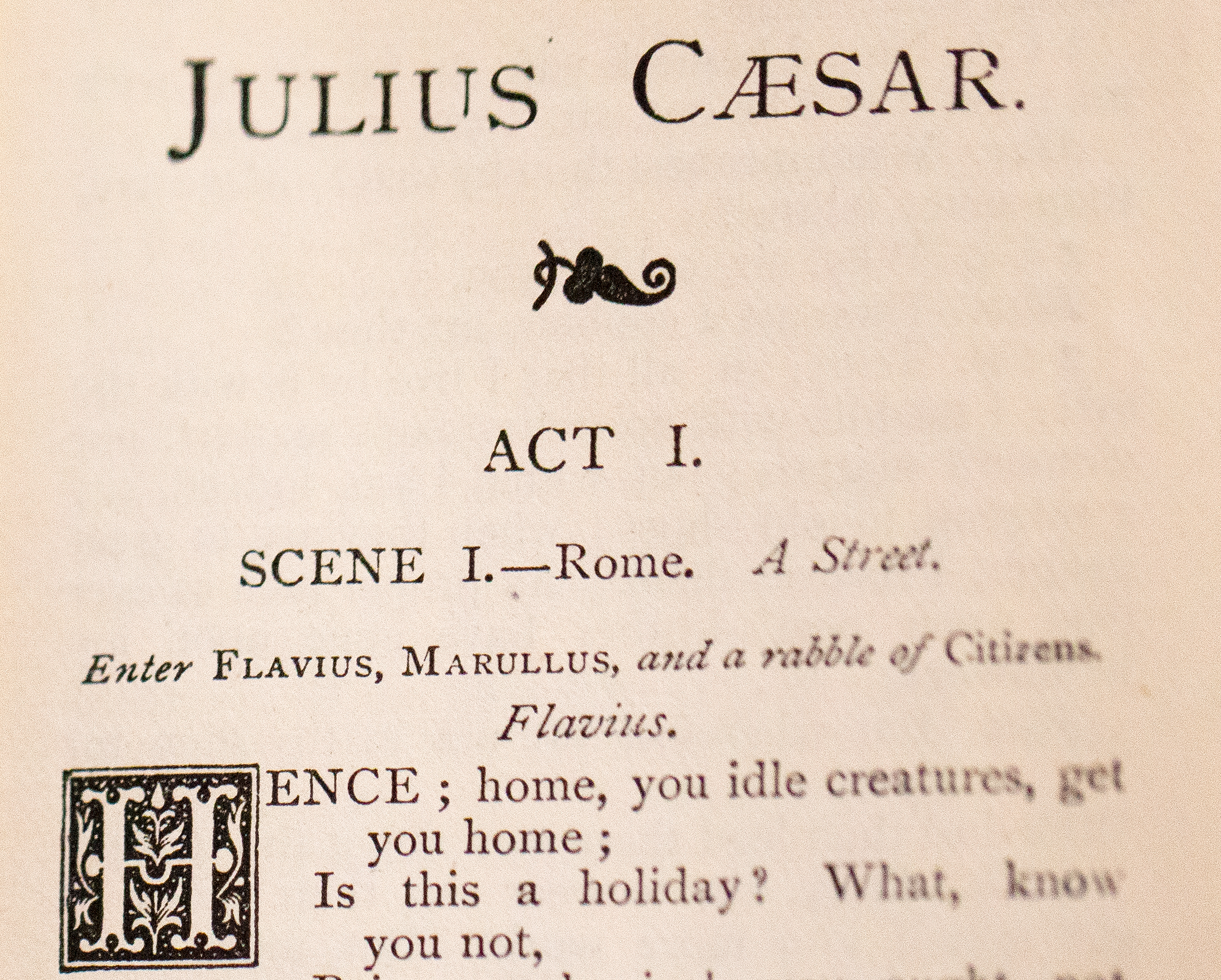
Julius Caesar, a Case of Realpolitik

05 Saturday Apr 2025

Posted by Richard Watson in Uncategorized

≈ Leave a comment

Julius Caesar is a 425 year-old modern play about how political leaders are corrupted and in turn, manipulate and mislead the public for their own selfish motives. Its Realpolitik reminds us that Rome still speaks to present times. In SPQR – A History of Ancient Rome, Mary Beard writes “[t]he alleged corruption, incompetence and snobbish exclusivity of leading senators were important topics in wide political debates throughout the last century of the Republic.” The statesman and philosopher Cicero wrote of his times that “the political situation alarms me more each day.”

William Shakespeare’s play was likely written in 1599, just before Hamlet, and covers the period after Caesar crossed the Rubicon and defeated Pompey in a four-year civil war, to his assassination in the senate in 44 BCE, causing another civil war resulting in the collapse of the Roman Republic and the beginning of the rule of emperors in 30 BCE.

Brutus, earlier pardoned by Caesar, will be coerced into joining the assassination conspiracy by Cassius and others. Mark Antony, who narrowly avoids the day of the long knives in the senate, will seize the opportunity, turn the tables on the conspirators and win the hearts of the public, only to later betray Rome. Sociopaths are beautiful and charming.

Julius Caesar opens with the mob (plebeians), celebrating the return of Caesar from his military victories. Flavius, a tribune, berates the mob asking “Is this a holiday?” (1.1.2) (in Elizabethan times, holiday was indistinguishable from a holy-day). But it is actually Lupercalia – a festival of fertility where naked men romp through Rome whipping any women they find. Caesar is concerned with his wife’s infertility and asks Mark Antony, one of the rompers, to “touch” her in hopes of a cure.

Antony, knowing that one must render unto Caesar whatever is Caesar’s, and perhaps too eager to please, replies: “When Caesar says ‘Do this,’ it is performed” (1.2.10). Later, Antony’s famous oratory will demonstrate how easily citizens bow to the whims of those in power, and how easily and unknowingly the public will abandon their own interests. However, at this point, Antony is merely following orders – the hollow excuse of men who forsake morality in pursuit of power. During his funeral oration, Antony will speak of Caesar’s will which promised money and property to the citizens. Immediately after consolidating his power, Antony will coldly revoke this bequest and rob Rome of its inheritance “…we shall determine how to cut off some charge in legacies” (4.1.8-9).

But immediately from the crowd comes the soothsayer’s famous warning “Beware the Ides of March.” Brutus and Cassius privately discuss their worries, and Brutus expresses “I do fear the people choose Caesar for their king” (1.2.78-9). Cassius then goads Brutus:

Men at some time are masters of their fates.
The fault, dear Brutus, is not in our stars
But in ourselves, that we are underlings (1.2.138)

Caesar has his eye on these two and observes:

Yond Cassius has a lean and hungry look:
He thinks too much: such men are dangerous (1.2.193-4)

While addressing the crowd Caesar suffers a seizure and Cicero, speaking Greek and never one to shy from public speaking, steps in for Caesar. Greek was understood by the educated but not by the plebeians. Thus Caska, who can’t follow Cicero’s speech, utters the phrase:

…but for my own part, it was Greek to me (1.2.282-3)

The next scene takes place during a “dreadful night” which “opens graves and roars” (1.3.74). Such omens make Cicero apprehensive, who understands too well that men loose their ability to reason when presented with the two-thousand year-old equivalent of fake news – “…but men may construe things after their fashion clean from the purpose of the things themselves” (1.3.34-5). Meanwhile, the conspirators, Brutus, Caska, Cassius and Cinna, resolve to assassinate Caesar in the senate.

The next act opens with Brutus expressing misgivings about joining the conspirators:

Th’ abuse of greatness is when it disjoins
Remorse from power…
Between the acting of a dreadful thing
And the first motion, all the interim is
Like a phantasma or a hideous dream (2.1.18-19 and 63-5)

As dawn breaks on the Ides, Cinna observes “…yon grey lines that fret the clouds are messengers of the day” (2.1.102-3). Like Horatio in Hamlet “…the morn in russet mantle clad walks o’er the dew of yon high eastward hill” (Ham 1.1.171-2) the feeling of something rotten hangs in the morning air.

Momentum builds, and Ligarius is welcomed to the growing crowd of conspirators proclaiming “Now bid me run and I will strive with things impossible…” (2.1.323-4) as ominous prophecies continue – “…graves have yawned and yielded up their dead” (2.2.18). A favorite image of Shakespeare’s used by Hamlet as well “‘Tis now the very witching time of night, when churchyards yawn and hell itself breathes out contagion to this world.” (3.2.379-381).

Caesar’s wife urges him not to venture into the senate, and he is inclined to heed her warning:

Caluhurina –
When beggars die there are no comets seen;
The heavens themselves blaze forth the death of princes.

Caesar –
Cowards die many times before their deaths;
The valiant never taste of death but once.
Of all the wonders that I have yet heard,
It seems to me most strange that men should fear,
Seeing that death, a necessary end,
Will come when it will come (2.2.30-7)

Decius (as you guessed, another conspirator) persuades Caesar otherwise and takes him to the senate where Caesar is distracted by Metellus who asks for a pardon of his banished brother. But Caesar will not yield:

But I am constant as the northern star,
Of whose true-fixed and resting quality
There is no fellow in the firmament (3.1.60-63)

The conspirators stab Caesar who utters the famous line “Et tu Brute? – Then fall, Caesar” (3.1.77). Covered in Caesar’s blood, Brutus quietly observes “ambition’s debt is paid” (3.1.83).

The play pivots to Antony who, confronting the conspirators, says he is willing to die alongside Caesar:

O mighty Caesar! Dost thou lie so low?
Are all thy conquests, glories, triumphs, spoils,
Shrunk to this little measure?…
Live a thousand years,
I shall not find myself so apt to die (3.1.148-150 and 159-160)

Even in grief, Antony senses opportunity and realizes he must play along, because he is not really ready to die for a cause. When confronted by men with bloody knives, this is no time to stand on principle:

That I did love thee, Caesar, O ‘tis true…
Friends am I with you all, and love you all,
Upon this hope, that you shall give me reasons
Why and wherein Caesar was dangerous (3.1.194 and 220-2)

Brutus is satisfied and willing to allow Antony to speak at Caesar’s funeral so long as Antony does not blame the conspirators. In an aside, realizing a grave mistake, Cassius warns Brutus “You know not what you do” (3.1.233).

Left alone, Antony’s inner voice reveals his intentions to seize power and rain destruction on the land:

Thou are the ruins of the noblest man
That ever lived in the tide of times…
Cry havoc and let slip the dogs of war,
That this foul deed shall smell above the earth
With carrion men, groaning for burial (3.1.256-7 and 273-5)

At the funeral, Antony begins by praising the conspirators. In a brilliant piece of rhetoric, he turns the crowd against the assassins who realize they must flee Rome, because the gig is up:

Friends, Romans, countrymen, lend me your ears:
I come to bury Caesar, not to praise him.
The evil that men do lives after them:
The good is oft interred with their bones…
But Brutus says, he was ambitious,
And Brutus is an honourable man…
When that the poor have cried, Caesar hath wept:
Ambition should be made of sterner stuff.
Yet Brutus says, he was ambitious,
And Brutus is an honourable man…
If I were disposed to stir
Your hearts and minds to mutiny and rage,
I should do Brutus wrong…
I fear I wrong the honourable men
Whose daggers have stabbed Caesar: I do fear it…
If you have tears, prepare to shed them now…
For Brutus, as you know, was Caesar’s angel.
Judge, O you gods, how clearly Caesar loved him.
This was the most unkindest cut of all…
I am no orator, as Brutus is,
But, as you know me all, a plain blunt man
That love my friend…
For I have neither wit, nor words, nor worth,
Action, nor utterance, nor the power of speech
To stir men’s blood (various lines 3.2.74-216)

In an aside, Antony is pleased with himself. He has fooled everyone and overthrown the government:

Now let it work. Mischief, thou art afoot: Take thou what course thou wilt (3.2.251-2)

Like any crowd incited to riot, they storm the senate.

Revenge! About! Seek! Burn! Fire! Kill! Slay!…
Pluck down forms, windows, anything (3.2.198-9 and 250)

Battles ensue as Antony and the conspirators raise armies. Brutus quarrels with Cassius about ideals, because Cassius has seen the conspiracy as a means of accession to wealth.

Brutus –
I had rather be a dog and bay the moon than such a Roman (4.3.27)

Cassius –
Do not presume too much upon my love:
I may do that I shall be sorry for (4.3.63-4)

The two reconcile when Brutus learns of the death of his wife – “In this I bury all unkindness, Cassius” (4.3.157).

A great sense of remorse sets in. Not for nothing that the phrase caveat emptor is Latin. Brutus laments his actions and is resigned to his fate:

There is a tide in the affairs of men
Which, taken at the flood, leads on to fortune:
Omitted, all the voyage of their life
Is bound in shallows and in miseries (4.3.216-9)

Which echos Caesar’s apprehension at 2.2.30, and Hamlet in Shakespeare’s next play:

We defy augury. There is special providence in the fall of a sparrow. If it be now, ‘tis not to come; if it be not to come, it will be now; if it be not now, yet it will come. The readiness is all (Ham 5.2.215-8)

Brutus will take his life in the Roman manner:

…for Brutus’ tongue
Hath almost ended his life’s history:
Night hangs upon mine eyes: my bones would rest,
That have but labored to attain this hour (5.5.39-42)

Finding the body of Brutus, Antony praises him:

This was the noblest Roman of them all…
So mixed in him that nature might stand up
And say to all the world, ‘This was a man!’ (5.5.69 and 75-6)

In the end, this is not Caesar’s tragedy, who is no longer the noblest Roman, but the tragedy of Brutus.

——–

This is the first in a series of essays on the plays of William Shakespeare. I’ll highlight my favorite passages within the context of the Shakespearean canon. Line references are to The Arden Shakespeare, Third Series, which is my preferred text, due to their excellent scholarly analysis and commentary.

My Grandfather was a proud, self-educated, Ulsterman. There was a shelf in his home which was lined with beautiful books bound in red with guilded edges. Morning light would hit them and warm the room. Thus began a fascination with Shakespeare before I even knew who he was. I am immensely thankful.

Falstaff “Is not the truth the truth?” (1H4 2.4.233-4)
“Against stupidity, the gods themselves fight in vain.”

06 Wednesday Dec 2023

Posted by Richard Watson in Environment

≈ Leave a comment

Tags

American River, California, Environment, homeless, homelessness, River City Waterway Alliance

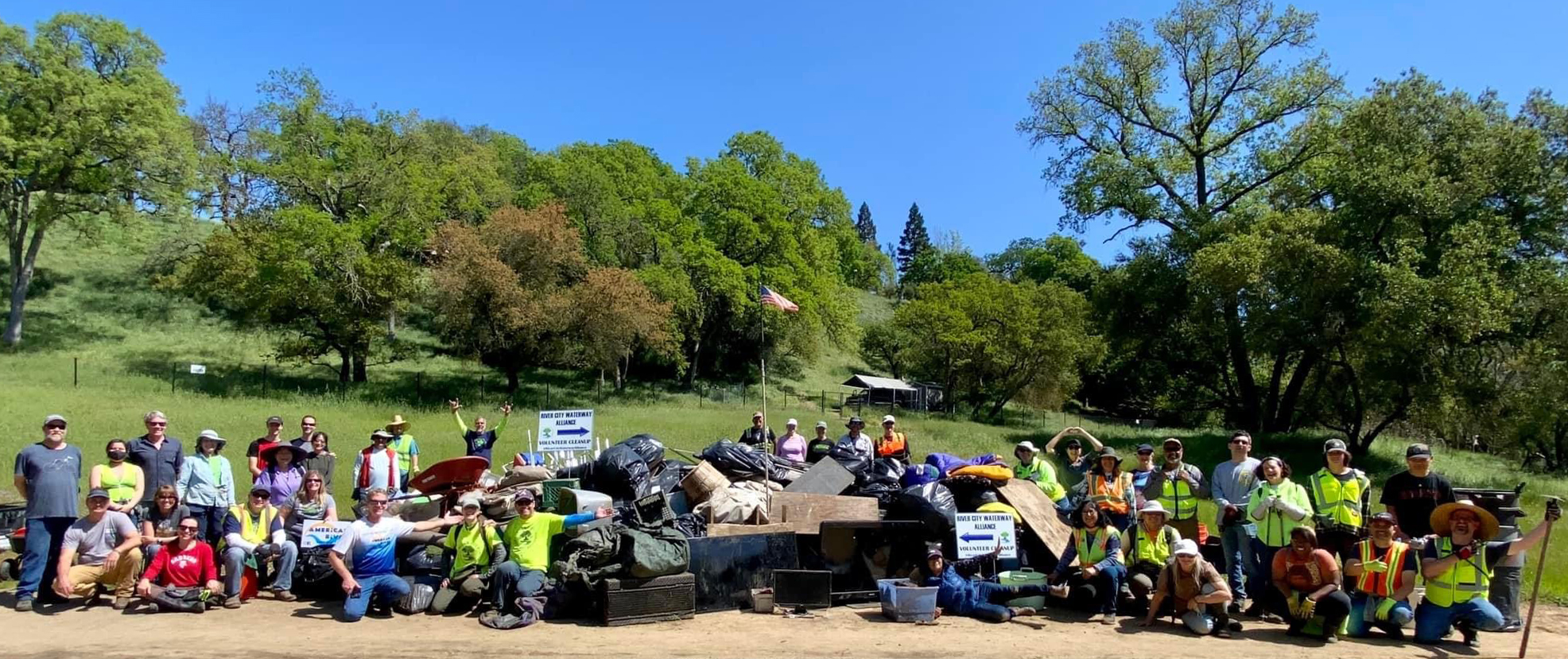
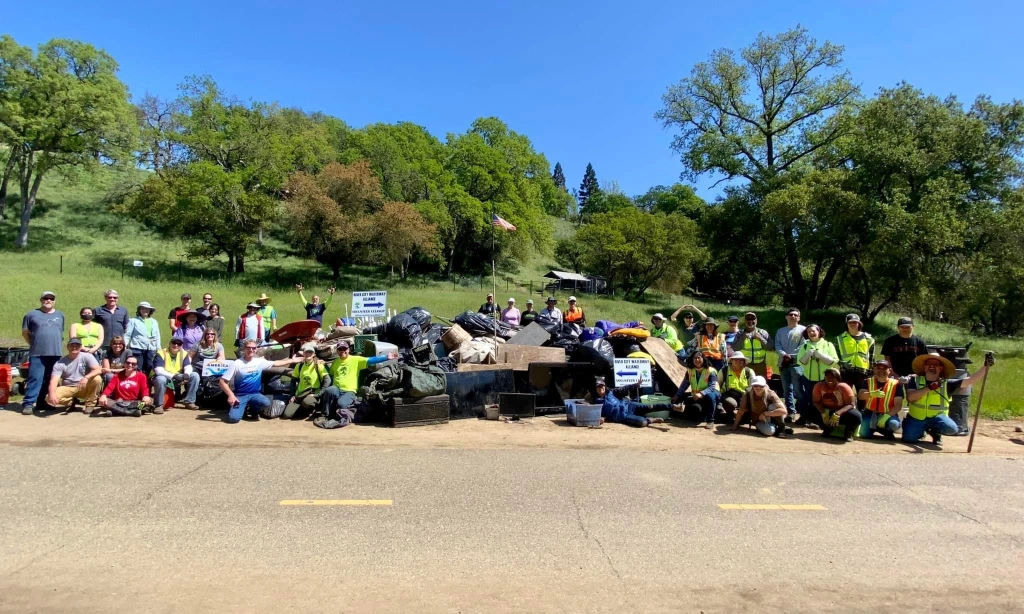
Here is your chance to see bias at work and a great example of how the media and politicians misinform and shape public opinion. Go to the Youtube channel for River City Waterway Alliance and look at any of the videos of river cleanups posted by this all volunteer group which recently received an award for environmentalist of the year (there are 186 videos from some 280 cleanups). RCWA has pulled over one-million pounds of trash this year from Sacramento’s rivers and creeks. Do you see the work of Canadian Geese in any of these videos? The Sacramento Bee thinks it does.

Here is the Sacramento Bee’s headline from its opinion piece on Thien Ho’s much welcomed suit against the City of Sacramento which he recently amended to include environmental violations:

“Sacramento DA Thien Ho is suing the city for river pollution caused by Canada Geese”

Granted, I haven’t read the piece beyond the headline, because it is behind the Bee’s pay-wall, and I do not wish to subsidize irresponsible journalism – that is, journalism which purports to present facts, does no investigation, and is merely the mouthpiece of undisclosed groups (disclosure here – I volunteer for RCWA). Based on previous editorials, the Bee has it out for Ho.

Mayor Steinberg and others have tried to claim that Ho’s suit is a political stunt, because they think Ho wants to be Attorney General. So what if he does – how is that an argument? I would like to see an AG who actually represents salary-paying citizens, so he has my vote. We have written the current occupant of that office on some important public safety matters…not a peep or the honk of a Canadian Goose have we heard from Rob Bonta. We have also written Steinberg and Councilmember Valenzuela – still nothing from gander or gosling. Just the sound of crickets.

It is heartening to see wildlife return to areas RCWA has cleaned. As just one example, deer are back to the Riverdale area next to Camp Pollock because this area was cleaned, and is being kept clean, by RCWA. We did recently see geese along the beach at Camp Pollock – but Canadian Geese? No immigration problems here…these are American Geese!

See more geese sightings here at Bannon Island.

A Harrowing Tale of Trash

15 Friday Sep 2023

Posted by Richard Watson in Uncategorized

≈ Leave a comment

Massive pile of trash removed earlier in the year from behind Gavin Newsom’s house (no, he did not help)

In case you were wondering just how trashed the American River Parkway is, here are some figures put out by County of Sacramento Regional Parks – But first, some words of warning from Shakespeare from about 1600, which these days is considered a “trigger warning”:

I could a tale unfold whose lightest word
Would harrow up thy soul, freeze thy young blood,
Make thy two eyes like stars start from their spheres,
Thy knotted and combined locks to part,
And each particular hair to stand on end
Like quills upon the fretful porpentine.
But this eternal blazon must not be
To ears of flesh and blood
.

During fiscal year 2022/2023 – 1,620 tons of trash were removed. This is 3.5 million pounds of trash (using metric tons). During calendar year 2022, there were 85 fires, mostly caused by homeless activity. Drug use is frequent with Methamphetamine seizures during fiscal 2022/23 totaling 1,544 grams, or 3.4 pounds.

Annually, illegal camping cost the County $6,121,663 in fiscal 2022/2023. Since 2015, the accumulated costs were $32.1 million. The report “…does not include the long-term costs or environmental impacts associated with illegal camping including, vegetation destruction and hazardous waste dumping or wildlife impacts due to dogs and human related issues.”

Remember, this is what Martin v. Boise says “Our holding is a narrow one. Like the Jones panel, ‘we in no way dictate to the City that it must provide sufficient shelter for the homeless, or allow anyone who wishes to sit, lie, or sleep in the streets…at any time and at any place.’”

How has all this been acceptable?

The Rubbish of Martin v. Boise

05 Saturday Aug 2023

Posted by Richard Watson in Environment, Political Commentary

≈ Leave a comment

Tags

American River, Martin v Boise

Most west coast cities have wrongly concluded that Martin v. Boise prohibits cities from banning camping. Here is that brief opinion from the Ninth Circuit:

“We consider whether the Eighth Amendment’s prohibition on cruel and unusual punishment bars a city from prosecuting people criminally [emphasis added] for sleeping outside on public property when those people have no home or other shelter to go to. We conclude that it does.”

The discussion of civil rights in the case summary reiterates this criminal aspect of prosecution – “…the government cannot criminalize [emphasis added] indigent, homeless people for sleeping outdoors…” In its reference to the Eighth Amendment, the court again emphasizes criminality by holding that “…an ordinance violates the Eight Amendment insofar as it imposes criminal [emphasis added] sanctions…”

One of the facts stated in Boise is that the plaintiffs were “…denied access to the City’s shelters.” It appears that shelter beds were available but one was refused by a plaintiff, because he was required to take part in a religious program operated by the shelter. “Stay limits” were also mentioned as a reason for being denied shelter, however, this again involved a refusal to participate in the shelter’s religious program. Interestingly, the following is noted in the Procedural History – “there has not been a single night when all three shelters in Boise called in to report they were simultaneously full for men, women or families.” Thus, the plaintiff denied the offer of shelter because of his religious beliefs.

A municipality can ban camping, particularly in sensitive habits such as the American River Parkway. What a city, county or state cannot do is criminally prosecute those who sleep outside on public property. Obviously, this leaves a whole basket of other laws which can, when violated, be prosecuted, and camps can be moved off the Parkway. But the City of Sacramento has refused to protect sensitive habitats and the tax-paying public through its misinterpretation of Boise and has allowed countless crimes to be committed within the City and the Parkway (technically, the Parkway is under County jurisdiction). Most egregious of which has been the destruction of forests and wildlife in the Parkway resulting from illegal camp fires, and the extensive pollution and trash resulting from these camps. By way of example, Sacramento County park maintenance crews removed 109 tons of trash from the illegal encampments at Bannon Island on the Sacramento River earlier this year. This is right next to Discovery Park (itself inundated with hidden trash) where many recreate at the confluence of the American and Sacramento Rivers.

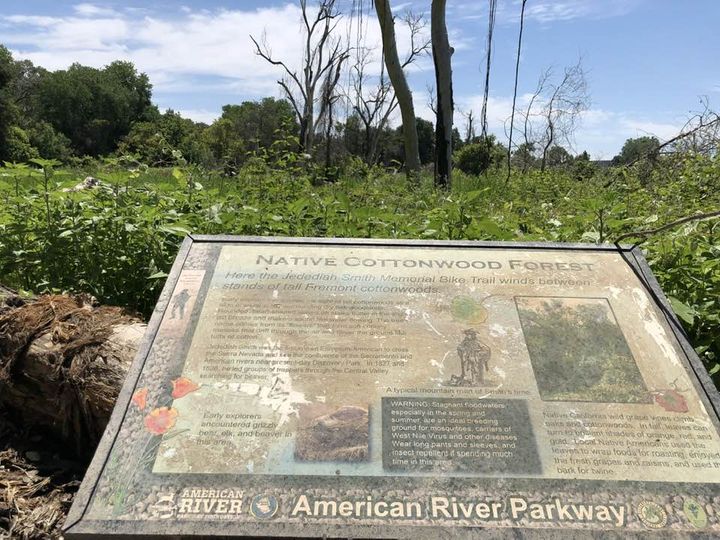
Cottonwood Forest destroyed by fire from homeless camp

Oddly, municipalities have ignored this observation made by the court in Boise– “Our holding is a narrow one. Like the Jones panel, ‘we in no way dictate to the City that it must provide sufficient shelter for the homeless, or allow anyone who wishes to sit, lie, or sleep in the streets…at any time and at any place.’” The Jones reference is to a case against the City of Los Angeles.

My point is that Sacramento has used the American River Parkway as a dumping ground for its homeless problem – and in the process, willfully ignored the ongoing damage to life (including the homeless) and the environment – all the while using dubious legal interpretations as cover. Homeless camps should be across from City Hall, in front of court houses and the California Capitol and other government buildings, and in Gavin Newsom’s neighborhood – not in the American River Parkway. Politicians must be forced to confront this crisis every day they go to go work, because as long as the true extant of the destruction is hidden from them, and taxpayer money is spent, they will wrongly assume that progress is being made.

That Eighth Amendment? Here it is in full – “Excessive bail shall not be required, nor excessive fines imposed, nor cruel and unusual punishments inflicted.”


“I know he would not be a wolf,
But that he sees the Romans are but sheep:
He were no lion, were not Romans hinds.
Those that with haste will make a mighty fire
Begin it with weak straws: what trash is Rome,
What rubbish and what offal, when it serves
For the base matter to illuminate
So vile a thing as Caesar!”

-William Shakespeare

Rough and Ready 2000

05 Monday Jun 2023

Posted by Richard Watson in Uncategorized

≈ Leave a comment

Tags

Rough and Ready 2000

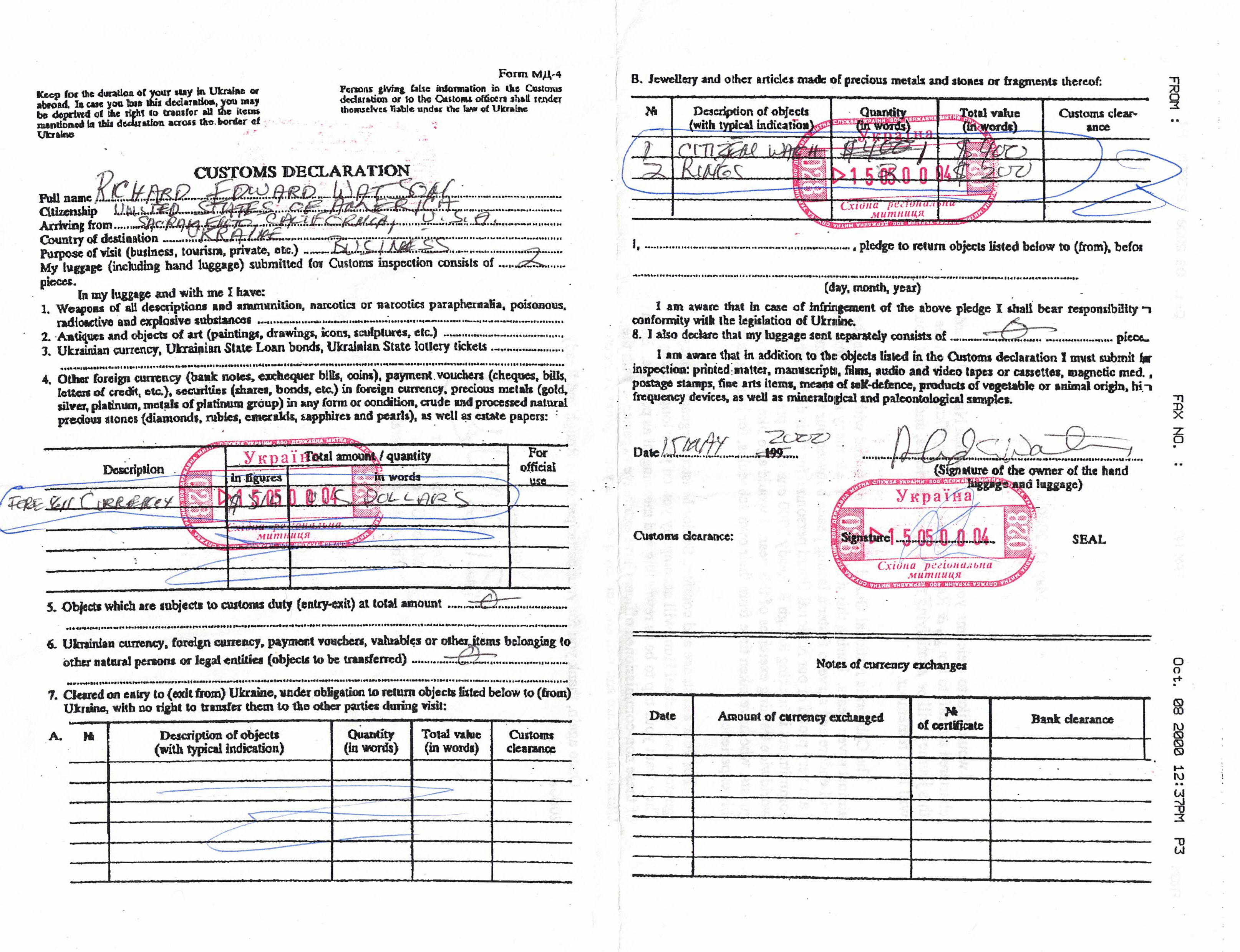
In May 2000, the Ukrainian press reported that residents were trapped and needing assistance after a flood near the Pechenizs’ke Reservoir on the outskirts of Karkiv as water levels rose on the Sivers’kyi Donets River. Residents were seen on rooftops awaiting rescue. The Ukrainian government appealed to the international community for help. The response was immediate. As aid poured in, a plane carrying rescue and medical workers crashed southeast of Karkiv causing an explosion at an automobile factory located in Chuhuiv.

Rough and Ready is a disaster response exercise in which California Air National Guard and members of California’s Emergency Medical Services Authority (EMSA) participate with civilians and military members from Ukraine – focusing on interagency cooperation, disaster preparedness, emergency response and civil emergency planning. The exercises presaged the February 2022 Russian invasion of the Ukraine when the Pechenizs’ke Reservoir was actually bombed in September 2022 in an attempt to destroy critical infrastructure.

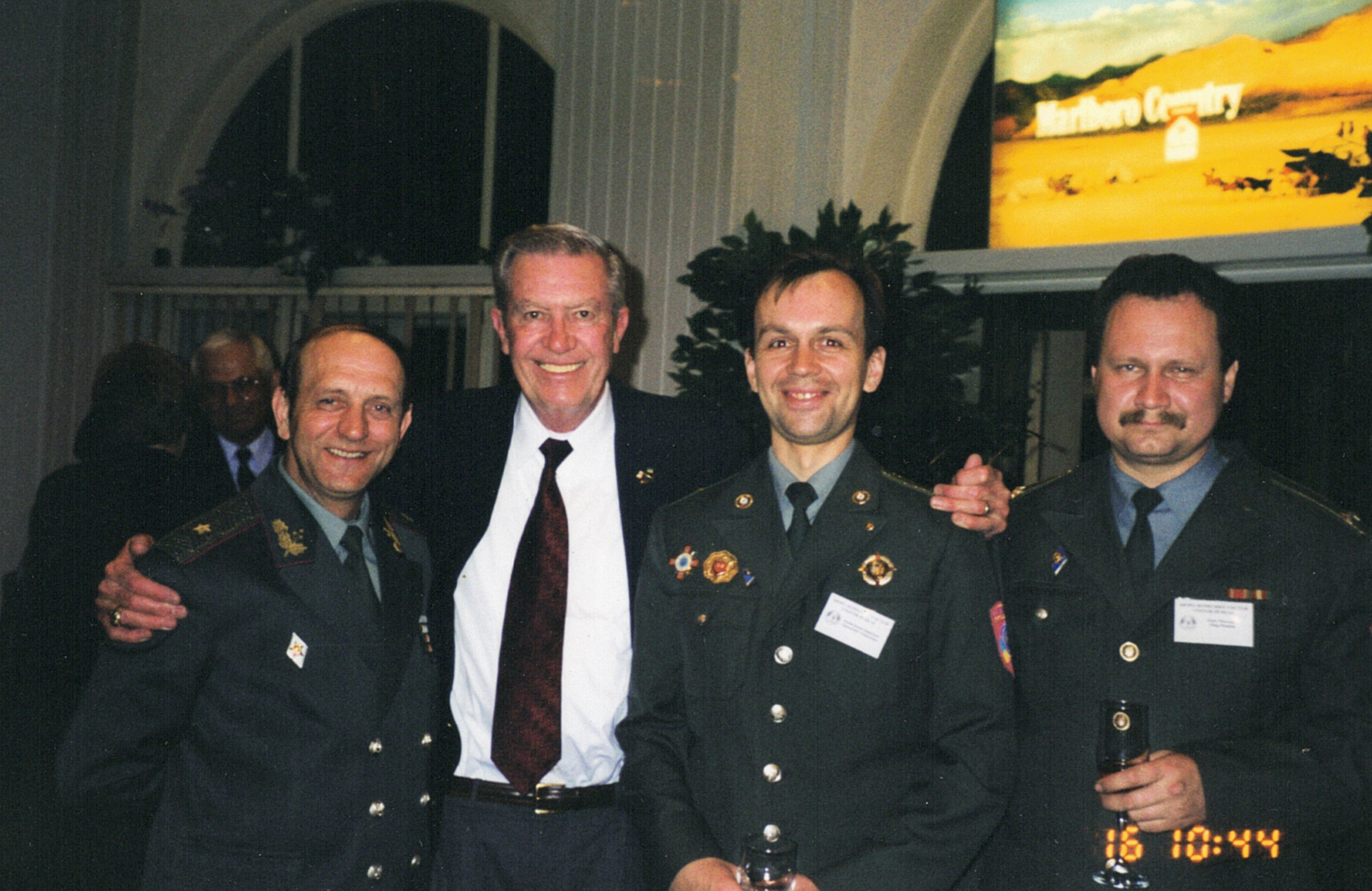
Richard Watson (my Father), then Interim Director of California’s EMSA, and his indispensable Chief, Dan Smiley, joined members of the State of California National Guard, EMSA, California Department of Health Services and California Disaster Medical Assistance Teams (DMAT) in the 2000 Rough and Ready exercise. Dad lead the civilian medical personnel, and Deputy Director Smiley was the primary civilian planner for the event which was lead by General David Hudlet from the California Air National Guard. Rough and Ready 2000, was held near Kharkiv, at a Ukrainian National Guard facility. The California team consisted of 165 personnel including the California National Guard and civilian medical and health personnel. In addition to simulating a disaster, the team provided humanitarian aid and health education to the population during the event. Funding was provided by the Cooperative Threat Reduction program.

“The California National Guard has had a close working relationship with the Ukraine military and the Ukraine National Guard since 1993,” writes Jim Garamone. “When Russia invaded Ukraine with more than 150,000 troops…most people — especially Russian President Vladimir Putin — expected a Russian cakewalk. The men and women of the California National Guard knew better.”


One of the charities Dad supported was Doctors Without Borders (Médecins Sans Frontières). The nonprofit provides emergency medical aid to people in crisis, with humanitarian projects in more than seventy countries, including Ukraine.

Of course, Dad managed to find an Irish pub when he was in Karkiv.

They’ve got one in Honolulu, they’ve got one in Moscow too
They got four of them in Sydney and a couple in Kathmandu
So whether you sing or pull a pint, you’ll always have a job
‘Cause wherever you go around the world you’ll find an Irish pub

–The High Kings

Getting the Goat

16 Tuesday May 2023

Posted by Richard Watson in Uncategorized

≈ Leave a comment

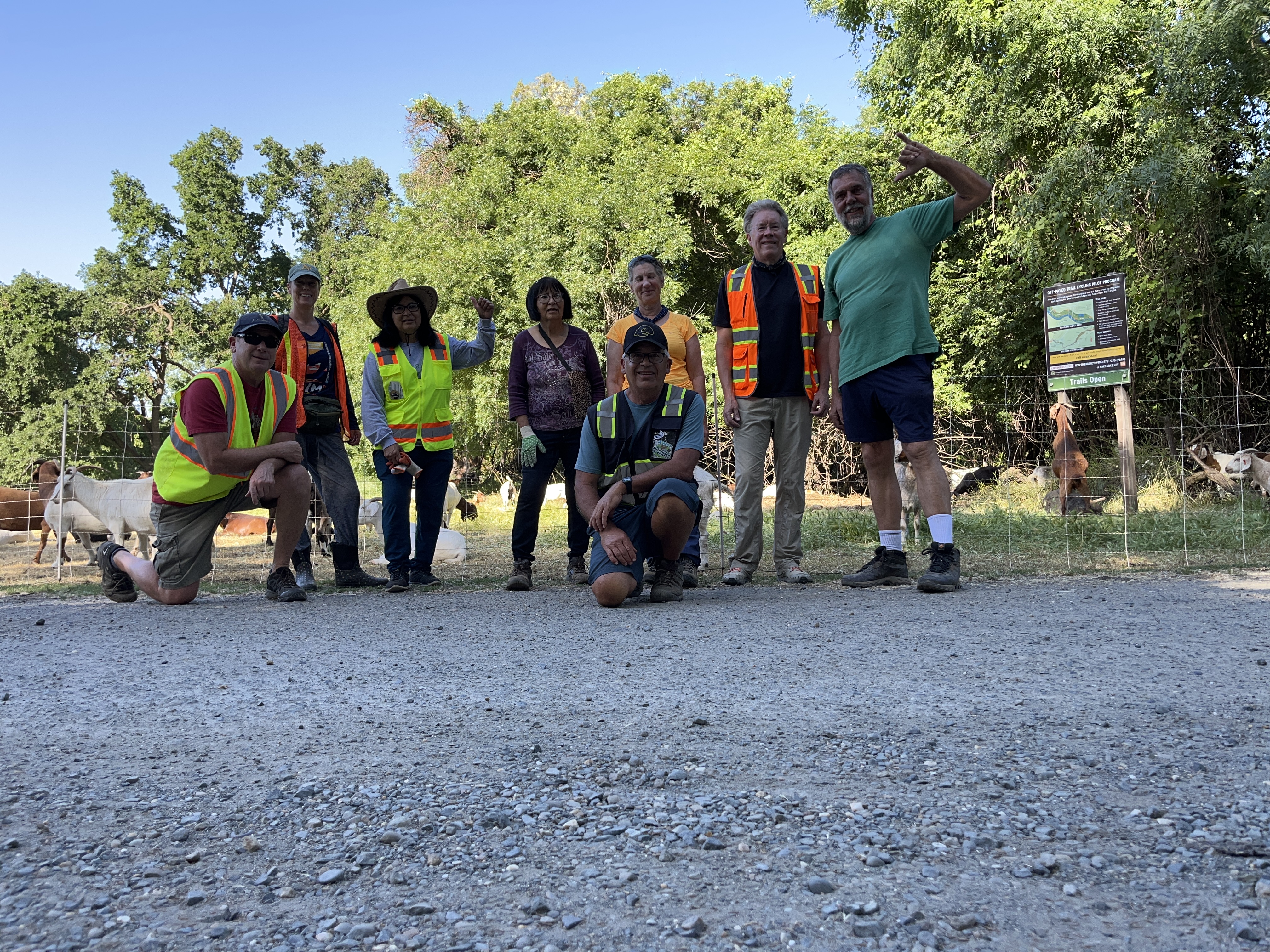
If Tenzing Norgay and Edmund Hillary ask you to join them on a hike in the mountains, or ultra running legends Jim Walmsley and Courtney Dauwalter invite you for a run, or Jack Nicklaus and Tom Watson ask you to help make up a foursome, you should know you’ll be in for one of the best experiences and something special. The same holds true when waterway steward Deborah Dodd asks you to join her for a wee trash mop-up at Riverdale. Her mop-ups are quite the thing, but this River City Waterway Alliance cleanup at Riverdale was really getting the goat.  

On Tuesday evening, nine intrepid volunteers pitched in to tidy some areas which had been heavily cleaned by RCWA before. But if you follow these RCWA tales you know that much trash is hidden on the American River Parkway. And it’s what lies beneath that is really shocking.

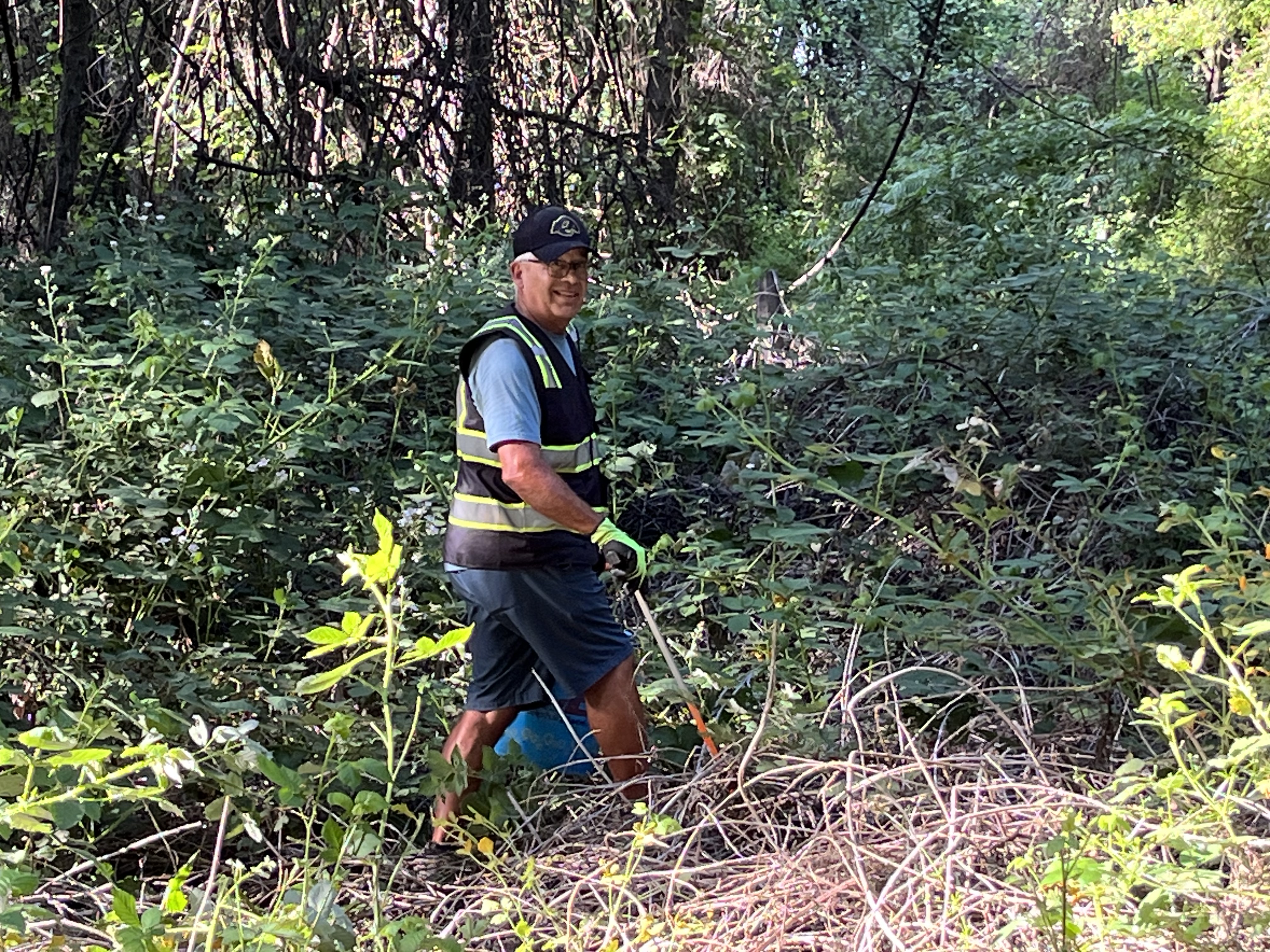
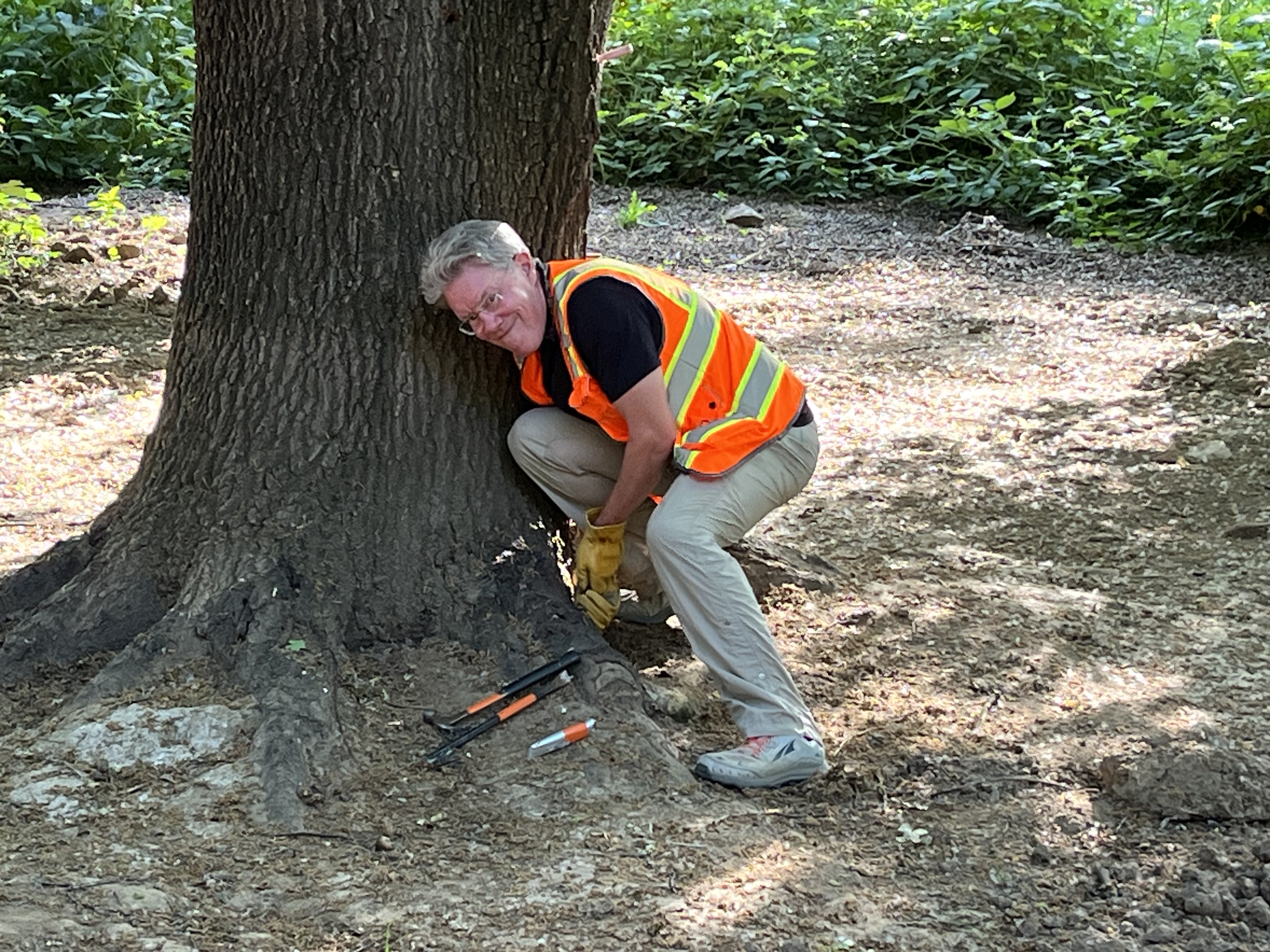
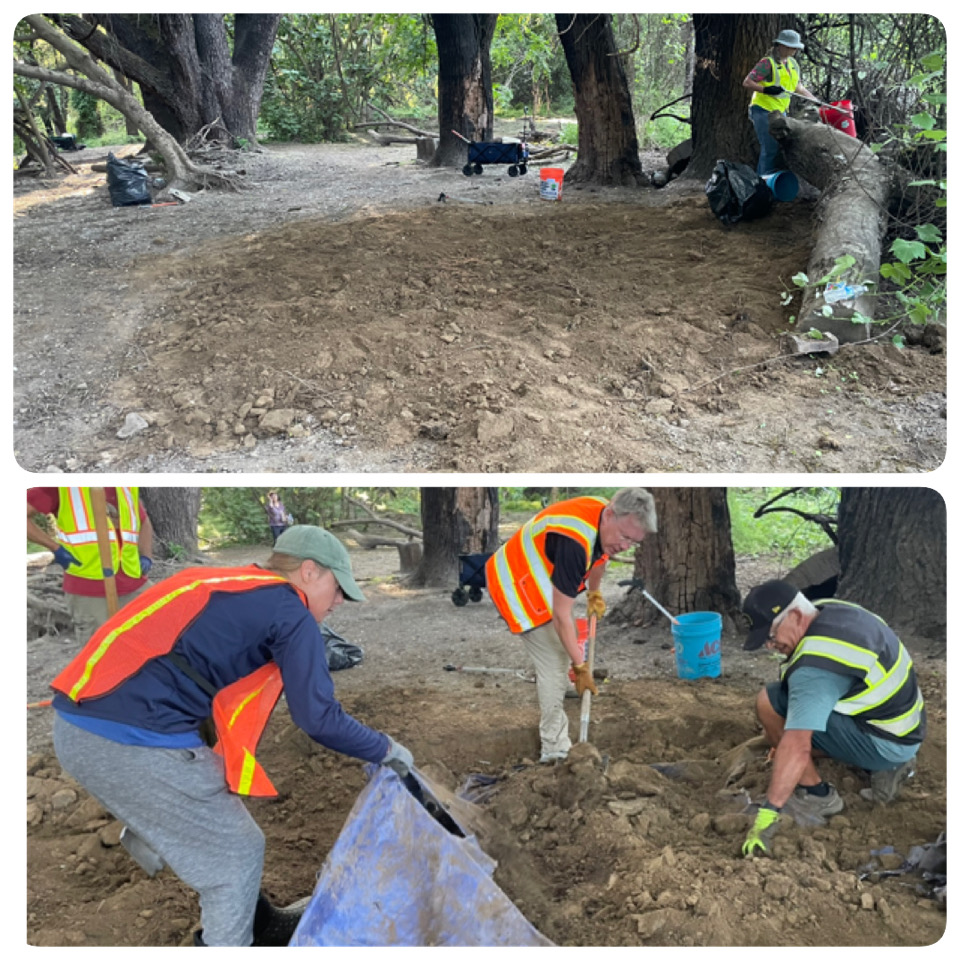
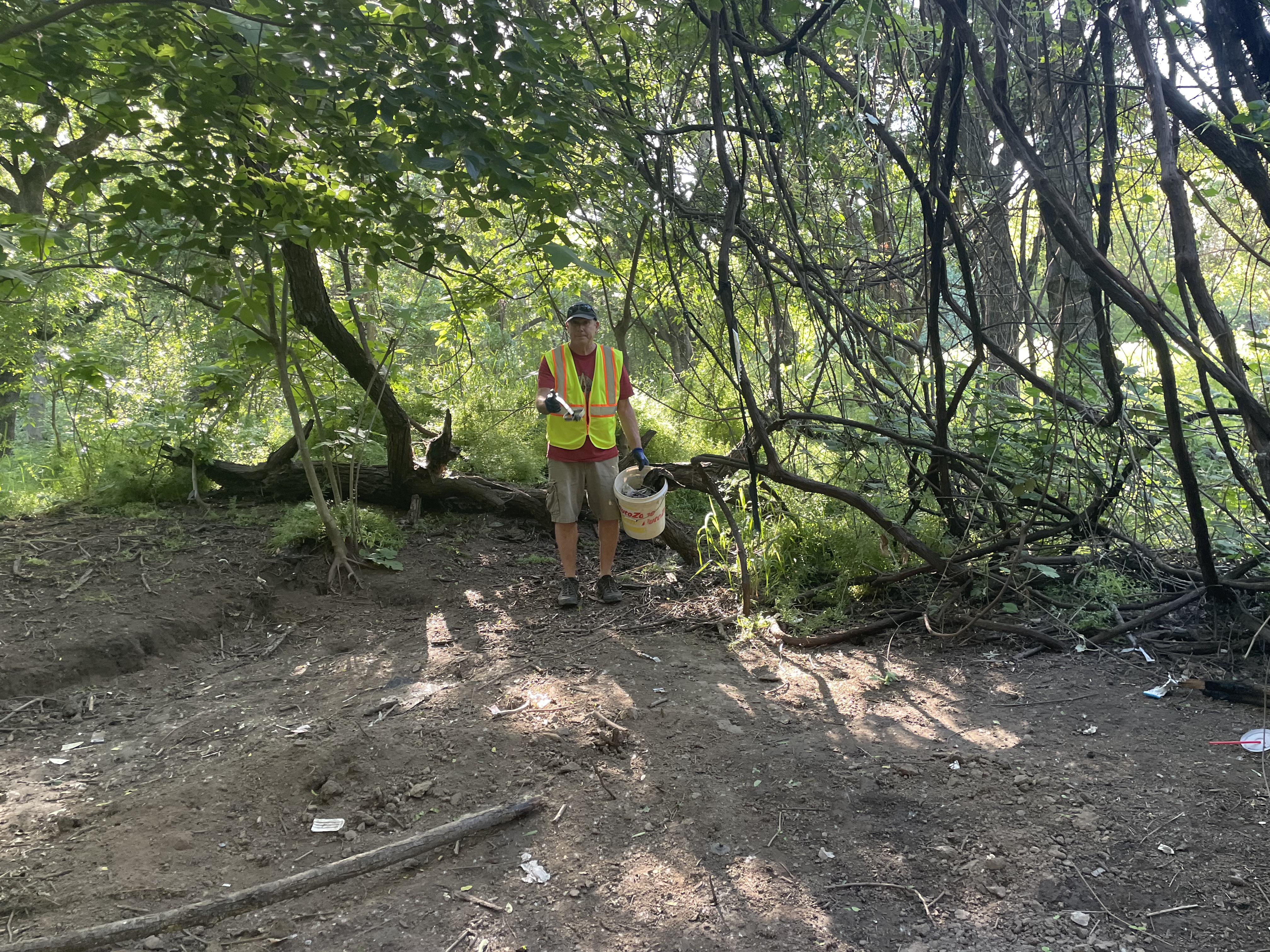
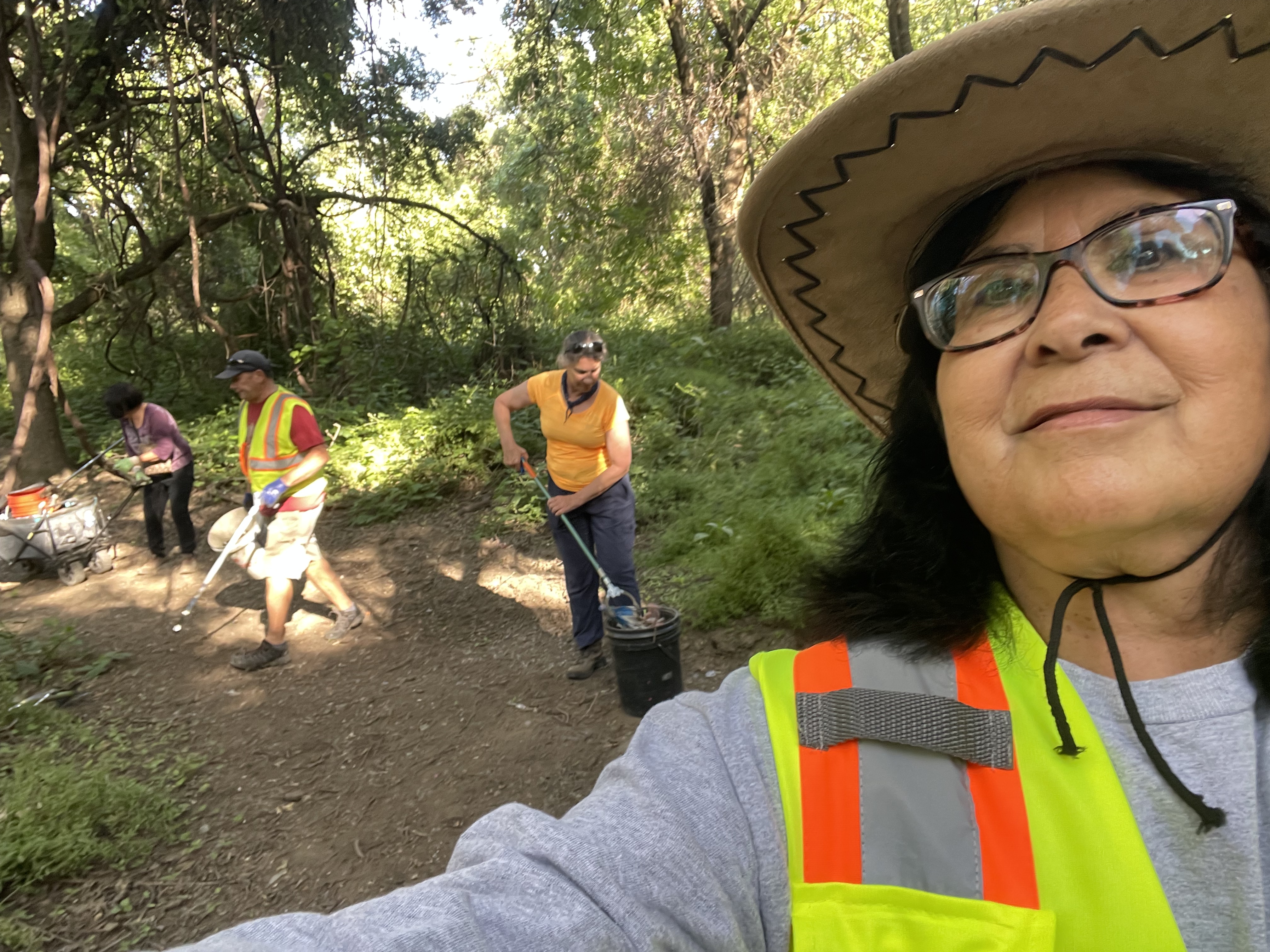
We wanted to clear some barbed wire, continue to chip away at a mound of buried trash, and get the small bits of trash leftover after County Parks cleared out some big stuff. But Debbie pointed out a buried tarp to Joe and mentioned that it needed some badgering. The crew dug in, and Lisa and Rudy joined Joe. Some twenty minutes later, the tarp was unearthed. Debbie, Margarita, Mirna, and Sharon covered the perimeter of the former camp tackling the bushes. Meanwhile, Mark and Rick went after some barbed wire but quickly discovered that heavier tools would be needed. A good chunk of wire was removed, but more remains…

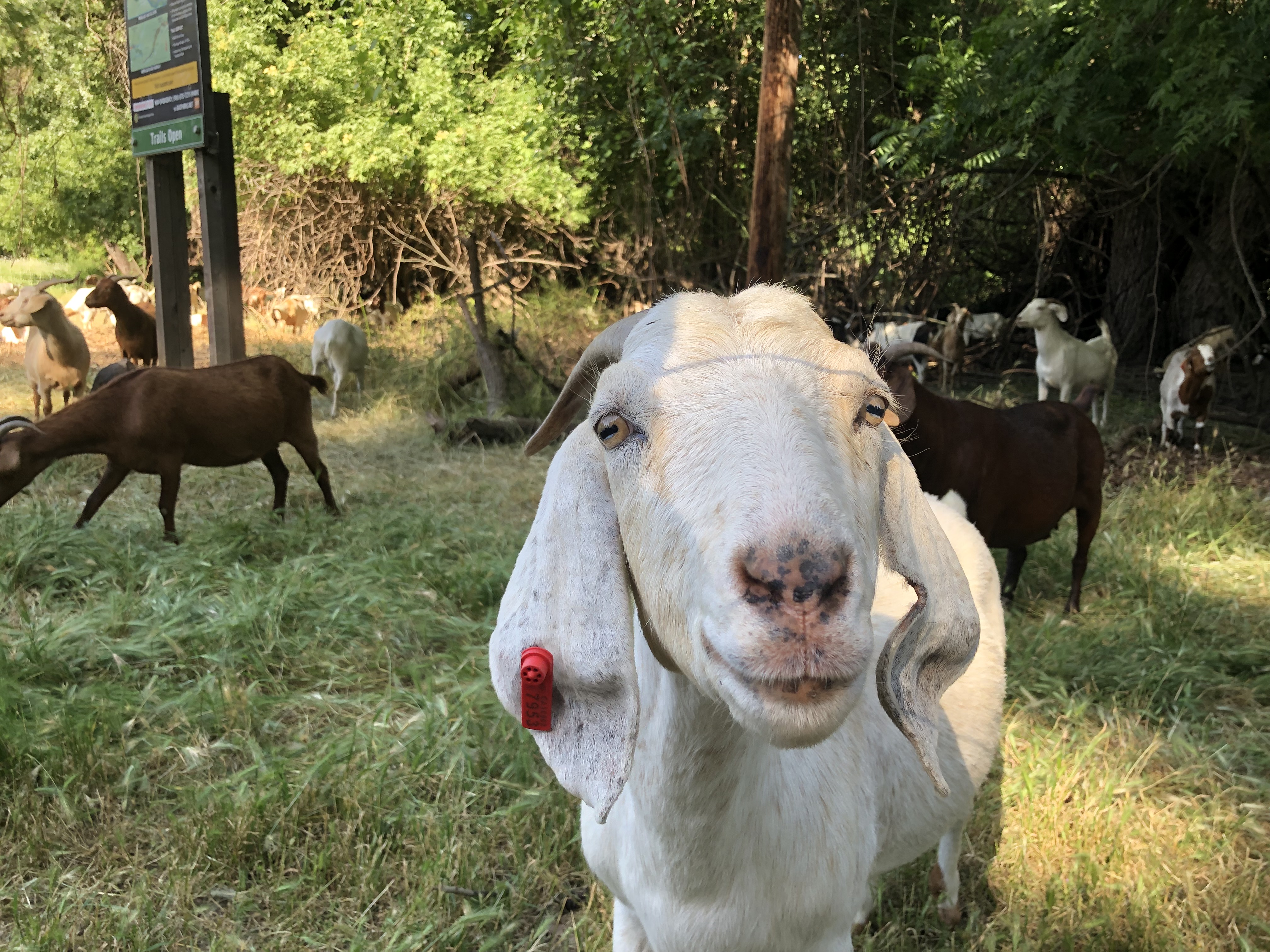
After creating a respectable pile of trash for County Parks to pickup, the crew adjourned to Camp Pollock for some beverages. No sooner had we settled down, then the goats decided to bust through their protective fencing and head in the direction of Northgate Boulevard, their Great Pyrenees guard dog leading the way. 

Well, RCWA volunteers are good at doing what needs to be done and instantly became goat wranglers! Debbie made for Northgate to block the goats from accessing the road. Others dashed around like Border Collies until the actual Border Collie showed up. The goats were successfully corralled back into their enclosure after munching their way around Riverdale for a bit.

You never know what you’ll get when you go to a RCWA cleanup…but it will never be boring.

(google the Monty Hall Problem for insight into the title of this piece)

Curious goat before its dramatic escape later in the evening.
Rudy doesn’t mind the brambles.
Rick struggling with an iron spike.
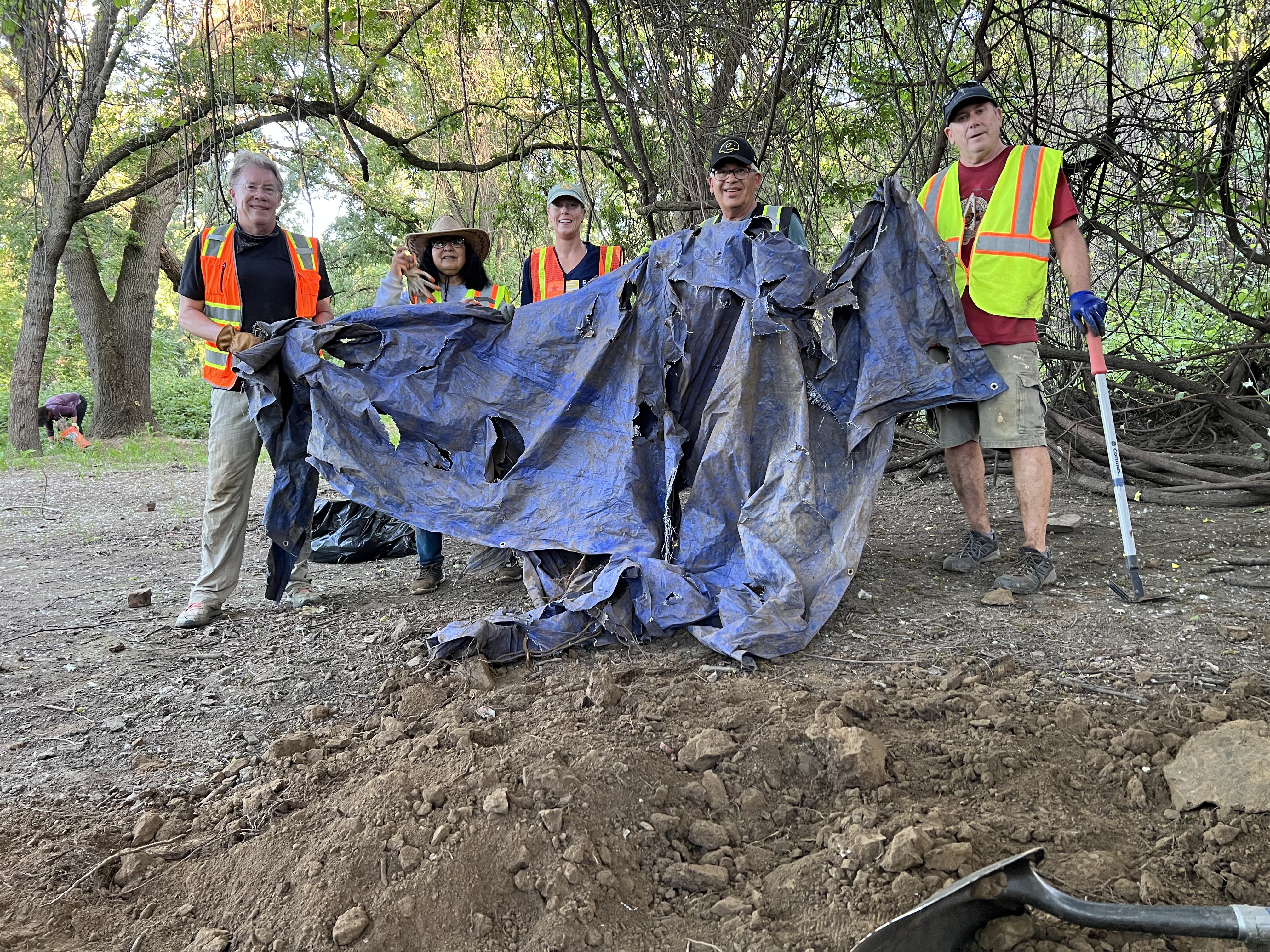
RCWA Crew
Before and after the tarp.
Margarita with mask.
Joe gets it done.
The crew at work.
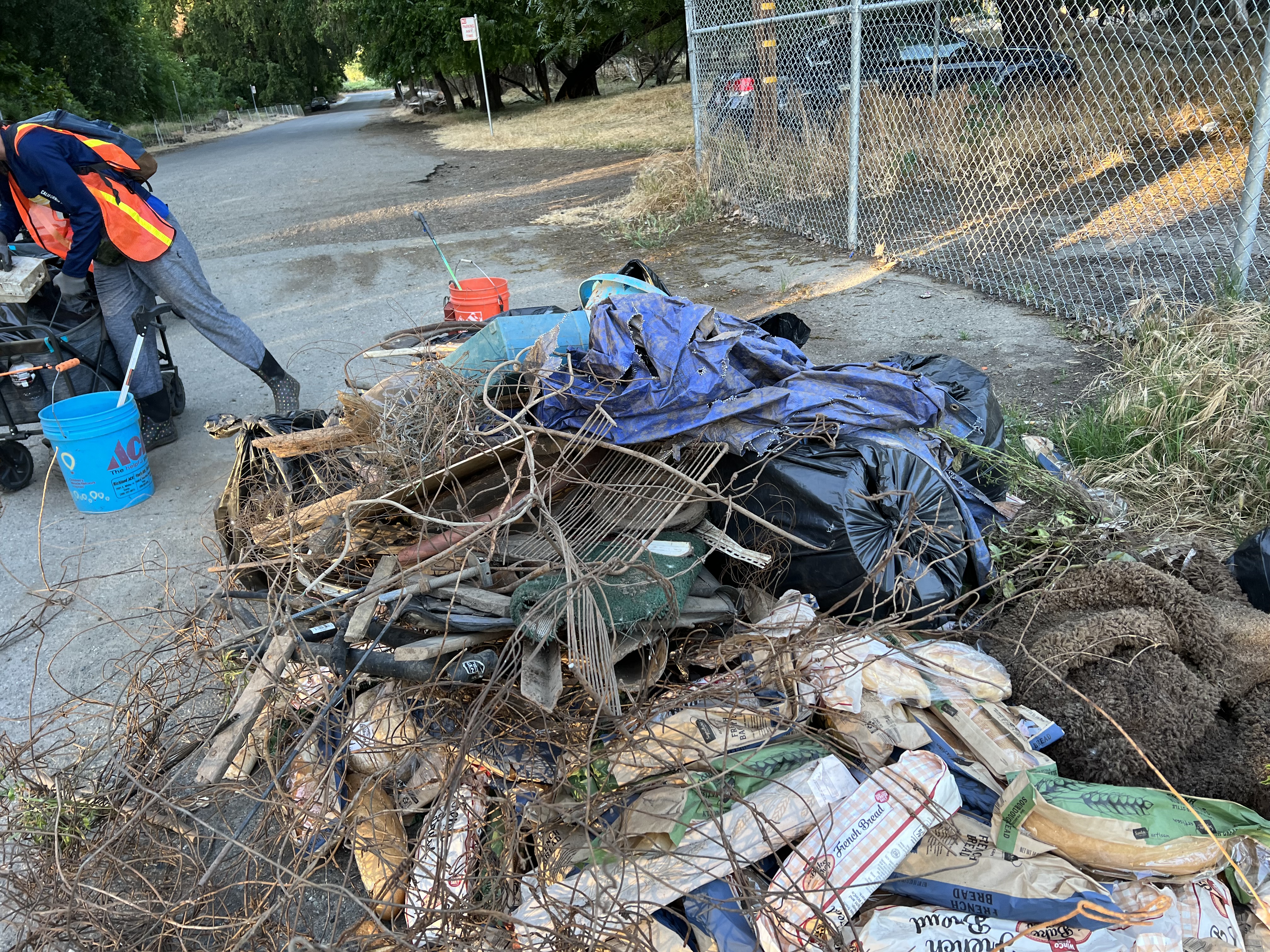
View of the pile.
Another view.
Joe and Lisa.
The tarp…finally.
Full loaves of bread dumped by a store?
After buried trash.
Yanking out the tarp.
Working on the tarp.
Rudy scores.
Nothing can stop him.
Tarp action.
Tarp action continued…
The Border Collie shows up.
Headed in the right direction.
Finally into the enclosure.
And back where they belong.

Plastic Goats and Hogs

19 Wednesday Apr 2023

Posted by Richard Watson in Uncategorized

≈ Leave a comment

Trindade Island is so remote that when Captain Robert Falcon Scott’s ill-fated Terra Nova Antarctic expedition put ashore in 1910, only a few were known to have visited before: Scott himself in 1901 in the Discovery; the astronomer Edmond Halley who allegedly populated the island with “Goats and Hoggs”; Sir James Ross on his way to Antarctica in 1839; and E. F. Knight with a party of Newcastle miners who were in search of buried treasure left by Captain Kidd (1). Rather than treasure, Scott’s expedition found the island infested with land crabs. Of these Henry Bowers wrote:

“One big fellow left his place in the circle and waddled up to my feet and examined my boots. First with one claw and then with the other he took a taste of my boot. He went away obviously disgusted: one could almost see him shake his head.”

But now, this uninhabited volcanic island is infested with something else – plastiglomerates. These are rocks which have become mixed with plastic as fishing nets wash ashore and melt from the heat – forcing geologists to rethink the three standard classifications of rock: igneous, sedimentary, and metamorphic. You may already be familiar with the Great Pacific Garbage Patch where a gyre of plastic waste slowly rotates in an area covering 7.7 million square miles. Or you may have heard of the 5-tons of debris which washes up annually at Midway Atoll smack in the middle of the Pacific. Birds are dying on the atoll from ingesting plastic. Where does it all come from? It is estimated that “80 percent of plastic in the ocean” is from land-based sources.

Sacramento contributes to this whirling vortex of plastics via its creeks and rivers. Already this year, one volunteer group, River City Waterway Alliance, in coordination with Sacramento County Regional Parks, has pulled 269,000 pounds of trash from the American River, and Arcade and Steelhead Creeks. Most recently 15,000 pounds of trash were pulled from behind Governor Newsom’s home along the American River with help from American River Lost & Found and Elk Grove Anti-Trash Community Cleanups.

The problem starts here with our complacent attitude towards trash. But the solution also starts here.

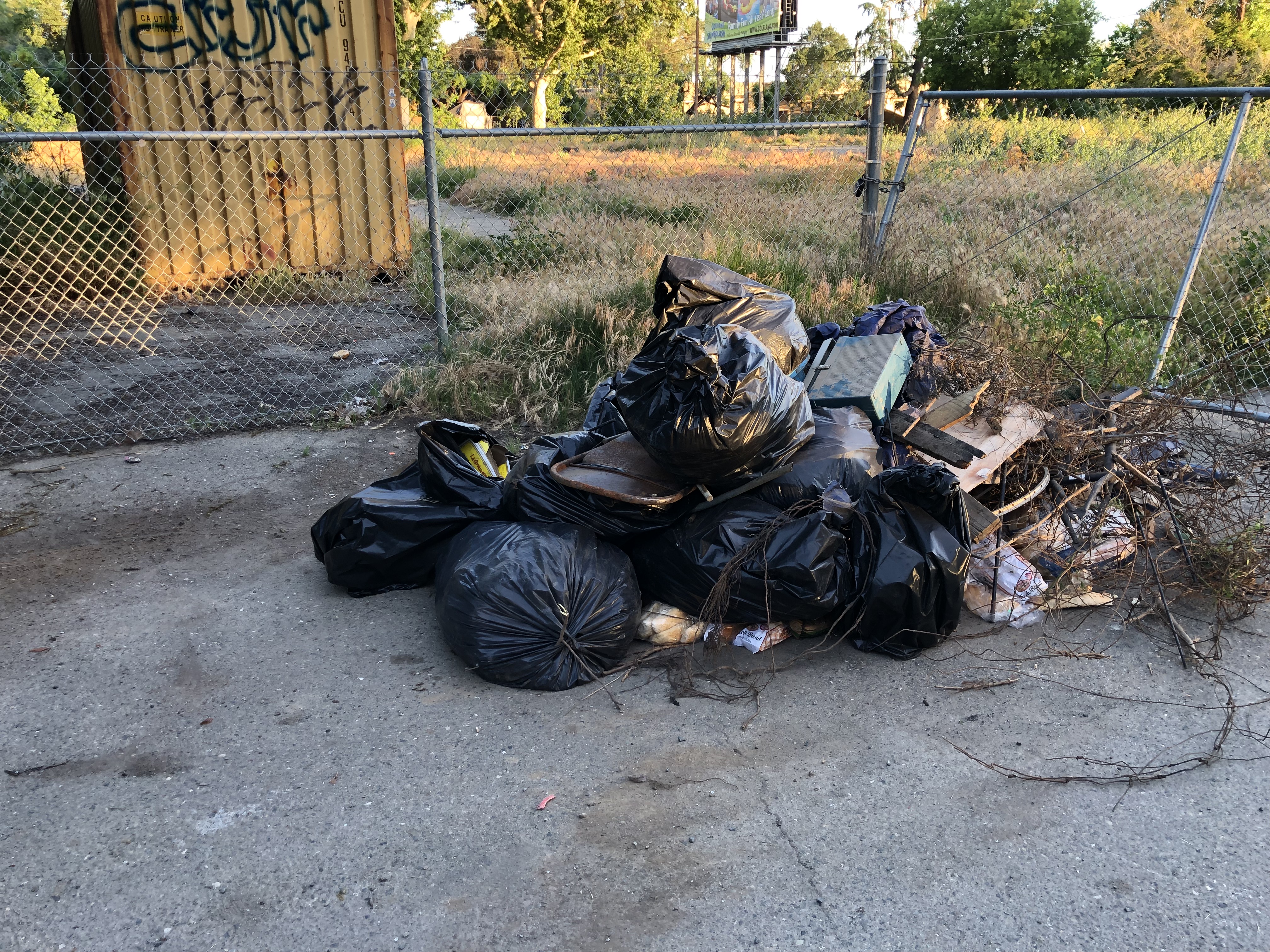
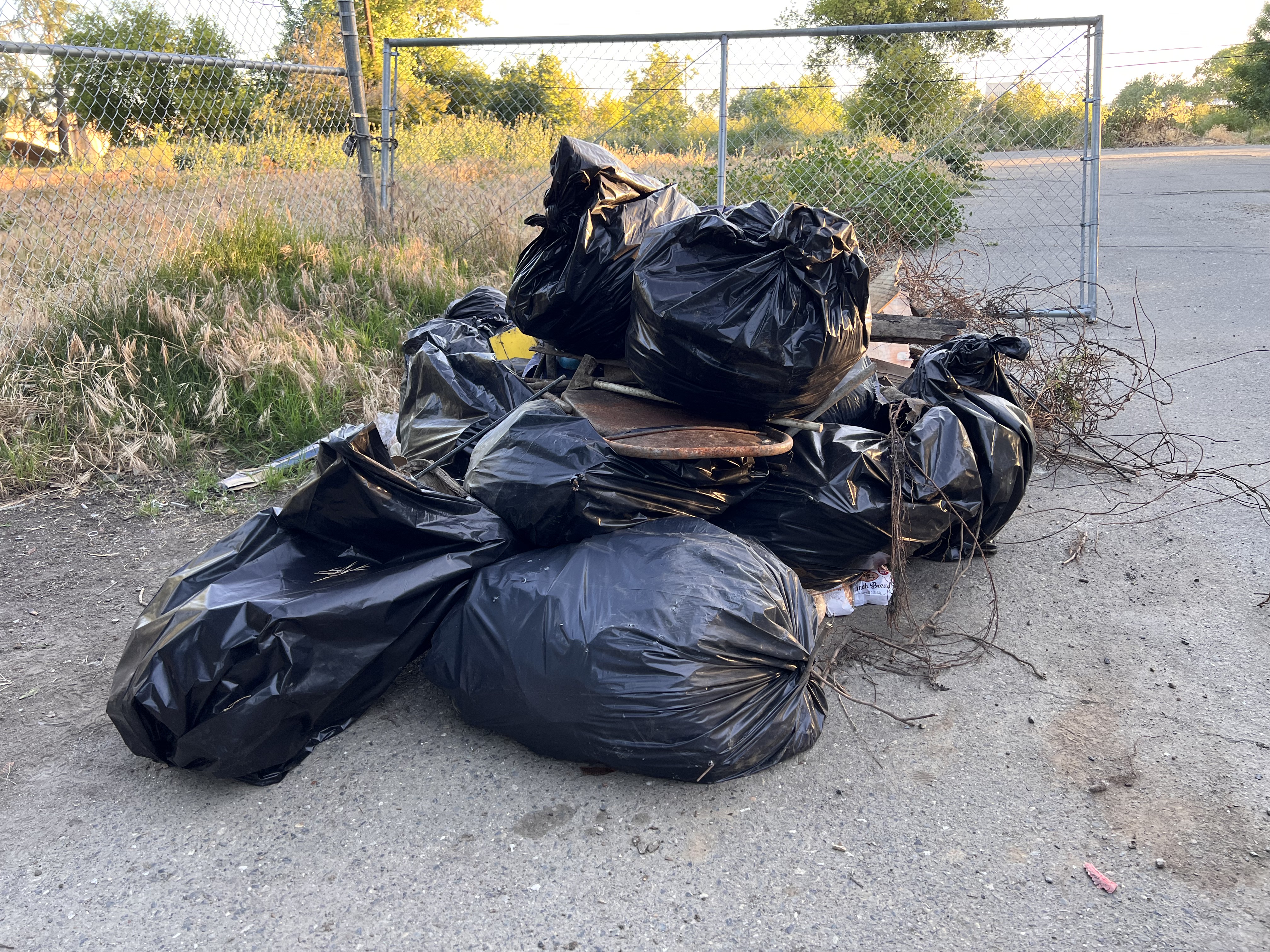
That pile of trash behind the Governor’s House

Trash near Steelhead Creek

img_4106

img_4106

1) Apsley Cherry-Garrard, The Worst Journey in the World.

The Unquestioned Orthodoxy

07 Friday Apr 2023

Posted by Richard Watson in Environment, Political Commentary

≈ Leave a comment

Tags

American River, Environment, River City Waterway Alliance, Sacramento

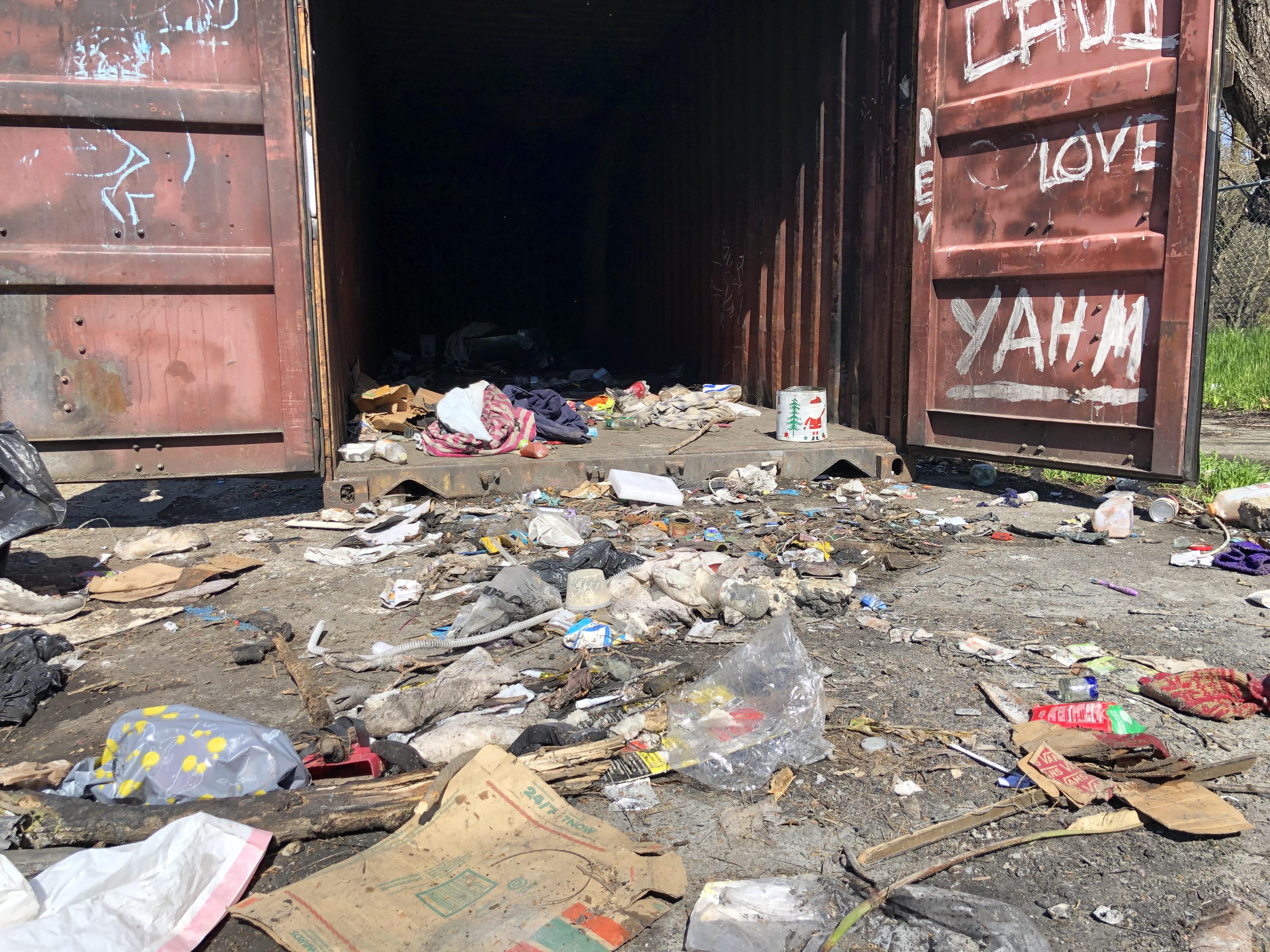
What is to be done? Tolstoy’s question is immediately relevant upon first opening the door of an abandoned shipping container along the American River. Abandoned in the sense that its owner has given up in frustration over its constant assault by vagrants. Abandoned in the sense that to the City of Sacramento, it is out-of-view from the general public, on land belonging to a third-party, and therefor does not exist and can be disclaimed. Abandoned in that it can be adjudged to be out of jurisdictional bounds.

However that shipping container is not unused. It has become a drug-den and an attractive nuisance as demonstrated by the abundance of used needles and half-eaten meals left to decay, as well as a place for romantic assignations evidenced by used condoms and the word “Love” scrawled on one door. But there is no love in the brilliant sunshine of these trash strewn, concrete pads on which the container sits – only honey-buckets lining the very back of the darkest corner of this receptacle, concealed on, and emptying into the American River.

The American River has become a receptacle for those “snarled and entangled in the extreme penury of things…” The river is a convenient place to hide human detritus while providing a false sense of confidence. Cities have become complacent with their tent-lined streets, but to wander along Sacramento’s rivers and streams is to witness the full-extent of squalor and failure. Politicians speak an infinite deal of new rounds of homeless funding, proclaiming progress because money is being spent. Yet the tales told along the river and near homeless camps tell otherwise.

Near the entrance of the shipping container lies a dead dog, or cat. The state of decomposition is advanced, so the distinction is irrelevant. Sink a spade into a patch of ground that looks clean, and indeed was recently cleaned. Turn over that shovelful of dirt, and the smell immediately informs that a trash pit has been unearthed: used needles, always needles; always batteries leaking their toxins into the soil and drinking water; clothing soaked with so much mud that a plain shirt weighs five-pounds or more; uneaten meals in single-use plastic containers; shredded canvases and bits of what once were tents now decomposing into attractive bite-sized pieces for fish to devour; and yes, plastic reusable bags for which Californians pay 10¢, ironically to keep out of landfills. One need hardly mention the Styrofoam which degrades into thousands of pieces. Some of the trash has been burned, and the fire damaged trees leave no doubt as to the cause…as to the excrement, some things shall remain unmentioned. But in summer, people swim downstream from this spot in nearby Discovery Park.

These problems are not new. During Tudor times (England in the 1500s), it is estimated that perhaps 20% to 30% of the population lived in poverty. Elizabethan prayer books “…implored mercy for the poor” according to Lucy Wooding in Tudor England. But a distinction was made between the “helpless poor” who “merited compassion,” and the vagrants who were undeserving and “…who had the capacity to work, but did not do so.” Towns feared that their limited resources for the “deserving poor” would be rapidly depleted if an overly permissive attitude was taken, so “vagrants” were sent back to their village of origin.

A great deal of money has been put towards seeking a solution to homelessness. And much more has been pledged for the future. So much so that tending to the needs of the homeless has become a multi-billion dollar industry. But why, for instance, is there an inverse relationship between funding and success? Over the last twenty-years, more funding has only resulted in growing numbers of homeless individuals. Could it be that the promise of free housing and services has attracted a new westward migration? In Steinbeck’s Grapes of Wrath, the poor came to California seeking work rather than handouts. “Muscles aching to work, minds aching to create…” When the migrants reached California, they found an oversupply of labor and limited work opportunities. The opposite is now the case, and often idleness abounds. Quoting Steinbeck again “There is a failure here that topples all our success.”

The types of housing and services required are expensive. A unit of affordable housing in California costs $600,000. The Corporation for Supportive Housing published a report calling for a rather exact 112,527 apartments to be built at a cost of $67.9 billion – which is $603,411 per apartment unit. In the absence of supportive services, this housing is quickly destroyed, since drug addicted or mentally-ill residents are usually unable to live independently. Many fine organizations have attempted to remedy these problems. Yet the nonprofit groups which have been tasked with this intractable work often find themselves overwhelmed and short of funding or the technical expertise necessary for long-term success.

California purports to be a leader in environmental issues, yet its rivers warn that it is best not to follow some leaders.


George Orwell’s introduction to Animal Farm, written nearly eighty-years ago, is worth quoting at length:

If publishers and editors exert themselves to keep certain topics out of print, it is not because they are frightened of prosecution but because they are frightened of public opinion…Unpopular ideas can be silenced, and inconvenient facts kept dark, without the need for any official ban…At any given moment there is an orthodoxy, a body of ideas which it is assumed that all right-thinking people will accept without question…Anyone who challenges the prevailing orthodoxy finds himself silenced with surprising effectiveness. A genuinely unfashionable opinion is almost never given a fair hearing…

The Sash My Father Wore, or How the Orange Came to Ireland

26 Sunday Apr 2020

Posted by Richard Watson in Ireland

≈ Leave a comment

“I remember music. The Glorious Twelfth is celebrated in July as a grand march in Belfast to mark the occasion when King Billy of Orange (the Dutch prince who became the Protestant King William III of England, Scotland and Ireland) rousted the Catholic King James II at the Battle of the Boyne in 1690.

We lived at a house on Marguerite Park, just off the Upper Lisburn Road where the bands from the Orange Order lodges would parade wearing their dark suits, orange sashes, and white gloves, with their big Lambeg drums beating out the rhythm of The Sash My Father Wore. My mother would play hostess bringing chairs for the family to sit on the crowded sidewalks and watch the marchers with their colorful banners of orange, green and white and pictures of William of Orange proudly displayed. We watched as my father marched by with his lodge and sash, and I remember the music.”

“The word orange,” according to author John McPhee “evolved from Sanskrit.” Originally a Chinese fruit, the orange traveled west through India and into Persia where it became naranj then finally orange in France. An old Roman city in the south of France had a name which sounded somewhat like the local word for orange – auranja – similar to the Spanish word for the fruit. The city eventually came to be known as Orange, and the prince of the city, Philibert of Orange, provided certain services to the Holy Roman Emperor of the time for which he “…was awarded a good part of the Netherlands…The Prince had no immediate heir, and his possessions and titles eventually passed to a German nephew. This was William of Nassau, Prince of Orange, who founded the Dutch Republic and the House of Orange.”(1) It was that subsequent holder of the title Prince of Orange who became William III. The Protestants in England were afraid of a Catholic resurgence and invited William to “invade” on a usual pretext in 1688 and depose James II. Thus, the orange was introduced to Ireland.

So sure I’m an Ulster Orangeman, from Erin’s isle I came,
To see my British brethren all of honour and of fame,
And to tell them of my forefathers who fought in days of yore,
That I might have the right to wear the sash my father wore!

It is old but it is beautiful, and its colours they are fine
It was worn at Derry, Aughrim, Enniskillen and the Boyne.
My father wore it as a youth in bygone days of yore,
And on the Twelfth, I love to wear the sash my father wore.

For those brave men who crossed the Boyne have not fought or died in vain
Our Unity, Religion, Laws, and Freedom to maintain,
If the call should come we’ll follow the drum, and cross that river once more
That tomorrow’s Ulsterman may wear the sash my father wore!

It is old but it is beautiful, and its colours they are fine
It was worn at Derry, Aughrim, Enniskillen and the Boyne.
My father wore it as a youth in bygone days of yore,
And on the Twelfth, I love to wear the sash my father wore.

And when some day, across the sea to Antrim’s shore you come,
We’ll welcome you in royal style, to the sound of flute and drum
And Ulster’s hills shall echo still, from Rathlin to Dromore
As we sing again the loyal strain of the sash my father wore!

Belfast – July 12, 2006.

(1) Oranges, John McPhee, pages 64-65. Farrar, Straus and Giroux, New York, 2000.

← Older posts

Recent Posts

  • The Right to be Heard June 11, 2025
  • Julius Caesar, a Case of Realpolitik April 5, 2025
  • “Against stupidity, the gods themselves fight in vain.” December 6, 2023
  • A Harrowing Tale of Trash September 15, 2023
  • The Rubbish of Martin v. Boise August 5, 2023

Pages

  • About Richard Watson
  • Photographs

Archives

Unknown's avatar

Enter your email address to subscribe to this blog and receive notifications of new posts by email.

Join 117 other subscribers

Blog at WordPress.com.

  • Subscribe Subscribed
    • Richard Watson
    • Already have a WordPress.com account? Log in now.
    • Richard Watson
    • Subscribe Subscribed
    • Sign up
    • Log in
    • Report this content
    • View site in Reader
    • Manage subscriptions
    • Collapse this bar
 

Loading Comments...