• Antarctica
  • Book Reviews
  • Economics and Taxation
  • Photographs
  • Political Commentary
  • Running
  • Science
  • Short Stories
  • Travel
  • About Richard Watson

Richard Watson

~ Commentary

Richard Watson

Tag Archives: Climate Change

The Third Man

02 Friday Jun 2017

Posted by Richard Watson in Political Commentary, Science

≈ 1 Comment

Tags

Climate Change, Global Warming, The Third Man

Orson Wells in The Third Man.

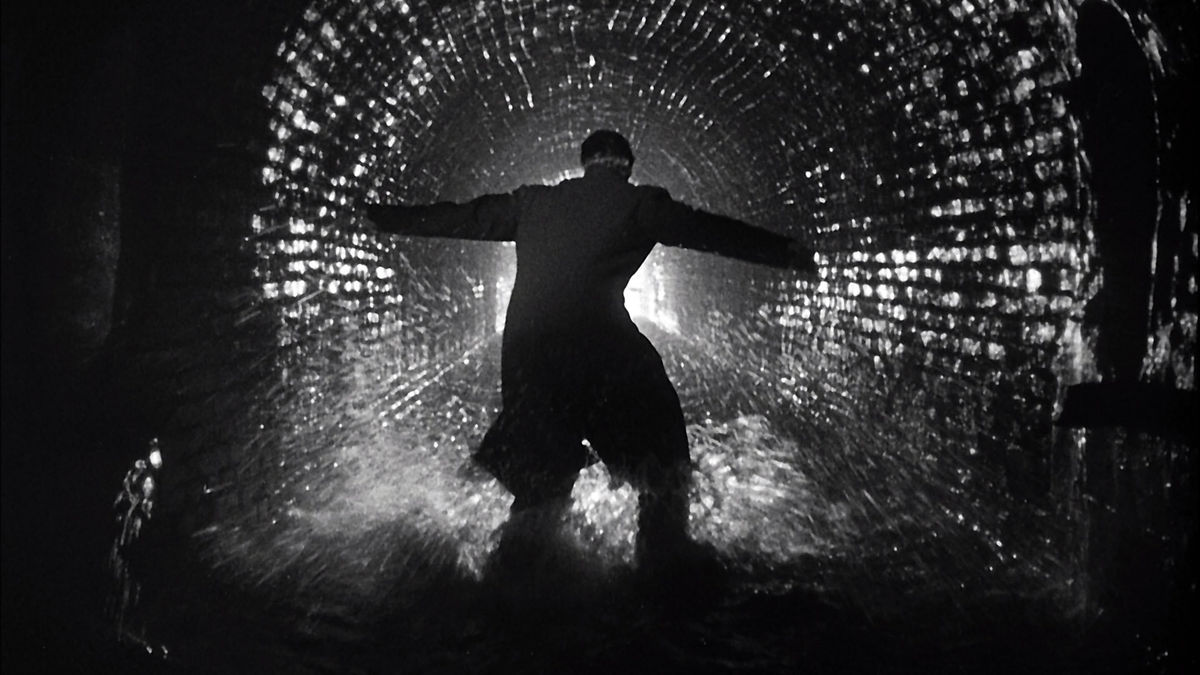
The climatic scene of Carol Reed’s 1949 film noir The Third Man takes place in the tunnels beneath Vienna and is the perfect metaphor for the current state of U.S. politics – because both Democrats and Republicans are chasing each other through the sewers.

If the Democrats do not climb out of the gutter, Donald Trump will be reelected as President in 2020. Why? The Democrats have shown that they are equally adept at name-calling, and this merely entrenches both sides. It is not unlike being bogged down in the Western Front one-hundred years ago.

To win in 2020, Democrats need to speak to the issues that matter to those in swing states. Why, for instance, should coal miners be concerned about climate change? Why should steel workers see that trade agreements are good for business? Why does immigration help the economy?
The climatic scene of The Third Man.

Here is the interesting thing about climate change. One doesn’t have to agree with the premise of man-made global warming to end up supporting policies that are good for the environment and also reduce carbon emissions. The discussion just needs to be put in a different frame. What I mean is that you can deny the science behind global warming, but we can nevertheless end up agreeing to policies that have the same result, as if you actually did believe in global warming.

The point is best made by Dr. Bjorn Lomborg, otherwise known as the Skeptical Environmentalist. In a paper he submitted prior to the Paris climate summit he notes: “Instead of trying to make fossil fuels so expensive that no one wants them – which will never work – we should make green energy so cheap everybody will shift to it.” N’est-ce pas?

A subtle, yet important difference. Make green energy inexpensive compared to carbon fuels, and the market will sort it out. This will still take time and require the development of technologies not yet known. But why not cut out all the aggravation and energy wasted in the argument over global warming and begin rowing the boat in the same direction?

Can you remember the last time a world power set itself a task that was technically impossible at the time and required the pooling of many scientific disciplines and industries? It was accomplished when the following words were spoken: “Houston, Tranquility Base here. The Eagle has landed.”

Sure, it cost a lot of money. But the investment in the space program has paid off many times over, and the stimulus to science and the resultant technologies have provided immense benefits to the economy. What you are reading this blog on right now was developed by minds that were inspired by the space program.

My solution to the whole mess is to send a human mission to Mars – because this will require the development of the very technologies that will reduce carbon emissions. An international team would attract the interest of the world, and you could even include an astronaut of the Muslim faith. Take all the money we’ll be spending bombing the Middle East in the next year and the program would be budget neutral. Let the Middle East bomb itself for awhile. It will still be there once we have astonished the world once again, and the countries of the Middle East may even see the folly of it all once they see what can be accomplished when people work together instead of propagating hate and fear.

“Roger, Tranquility. We copy you on the ground. You got a bunch of guys about to turn blue. We’re breathing again. Thanks a lot.”
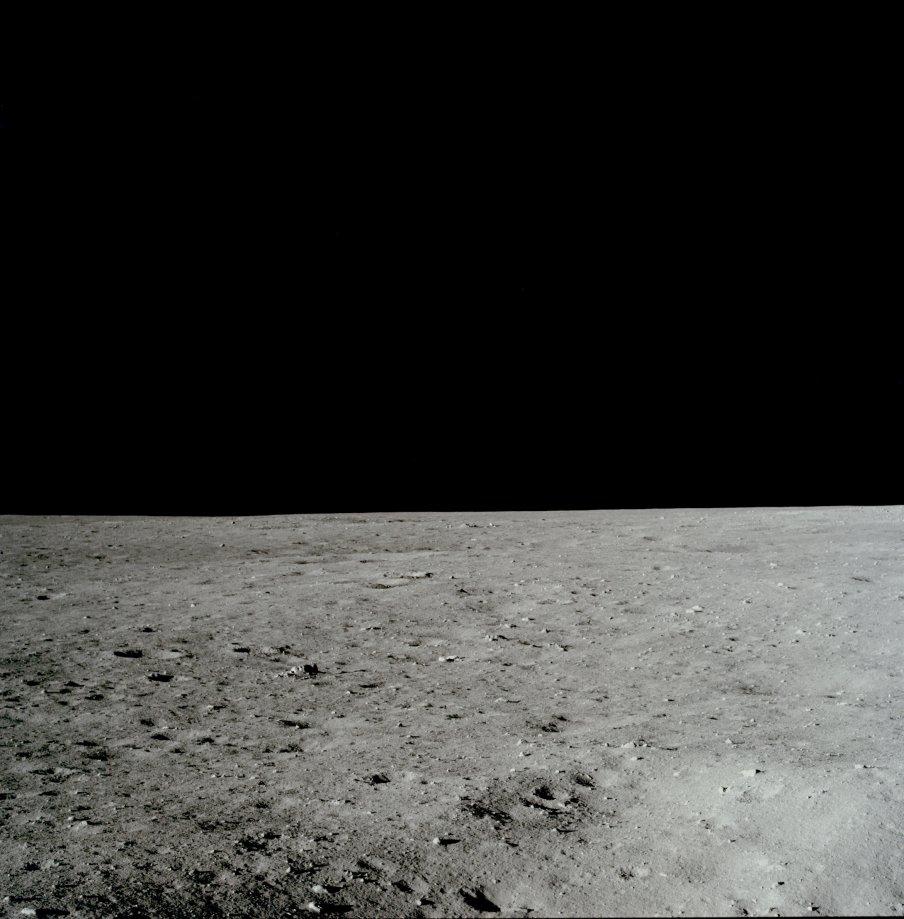
Tranquility Base.

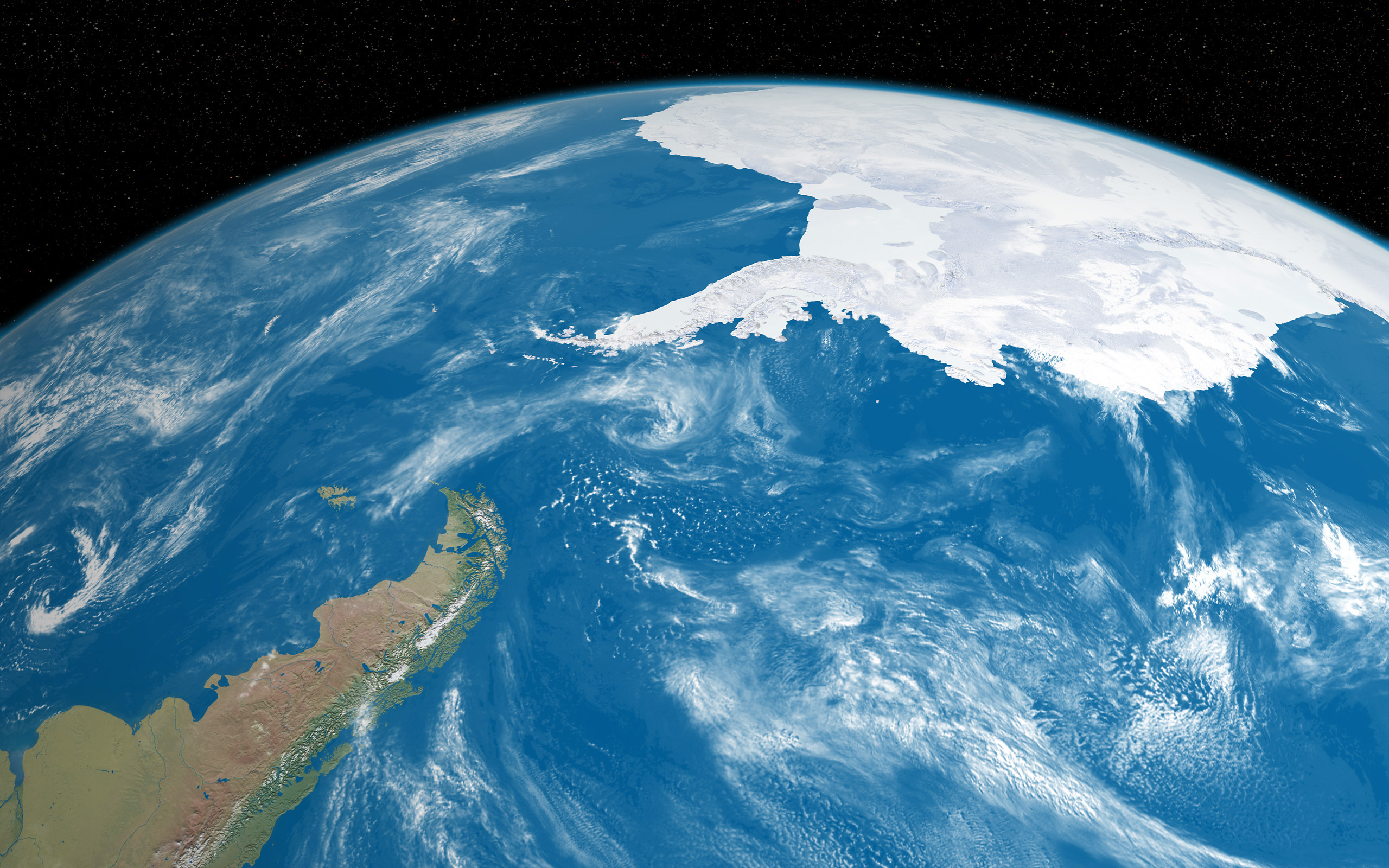
The Really Deep Challenge

13 Tuesday Dec 2016

Posted by Richard Watson in Antarctica, Climate Change

≈ Leave a comment

Tags

Antarctica, Climate Change

[the following is from a paper I wrote for an Antarctic course last spring]

“Airborne platforms…are ideal for ice-shelf cavity exploration due to their…operational insensitivity to crevasses (compared to surface-based data acquisition) …” (Southern Ocean Observing System). This is the scientific way of explaining that whereas people can fall into crevasses, airplanes generally do not. The challenge for scientists has always been one of translation. How to take meaning-laden, complex words and concepts and, without losing the gist, set them in a context for public consumption and discussion. Newton had it easy. Although the inspiration was brilliant, his expository was simple. The apple fell from the tree.

tae

The Crossing of Antartica (Thames & Hudson)/George Lowe, Huw Lewis Jones, the 1957/58 Commonwealth Trans-Antarctic Expedition.

Modern scientists have a harder challenge. Not only is the science more complex and difficult to understand, but the reality television mentality of many politicians and policy makers has promoted a culture that embraces ignorance. Witness Anderson Cooper’s comment to Donald Trump at a recent “debate” – “that’s the argument of a five year-old.” Such is the milieu in which the Challenge is set.

New Zealand is getting it right with its Deep South Challenge. Accepting that climate changes, the idea is to “adapt, manage risk and thrive in a changing climate.” To do so, and arrive at correct and economically viable decisions, a multi-disciplinary approach involving a positive feedback loop consisting of the public, educators, scientists and policy makers helps inform the science. For instance, what do civil engineers and architects need to know about extreme weather events when planning infrastructure; how do farmers manage crops in the face of more frequent droughts; how should tax and insurance policies be designed to benefit those communities most at risk to sea level rise so that the larger public good is not abused? This is the ground-truthing of public policy – using societal concerns and issues to prove the value of the science.

The Deep South Challenge has developed various engagement strategies to ensure that the science done in the Antarctic “…remains focused on and directed by societal needs.” Through lectures, seminars, briefing sessions and technical workshops, the Challenge responds “…to the most important national-scale issues.” Open and continuous communication is achieved by the use of online media, science festivals and public workshops among other tools. In this way, scientific priorities and research programs are established which lead back to the ground, or ice, in Antarctica.

antarctic_comp-0500

Antarctic sea ice. NASA.

Data and observations gathered on and around the continent help in the development of an earth system model which allows better management of climate risks. Climate observations in Antarctica help improve atmospheric models which in turn provide more reliable and precise weather forecasting. This allows the constituents of the Challenge to more effectively determine and plan for the impact of climate change on the economy and infrastructure. For instance, infrastructure decisions are improved by adding the stressors and risks associated with climate change to existing tectonic based models. It is well enough to understand what happens when the earth shakes, but you also need to know what energetic storms laden with heavy rain, wind, snowfall and resultant flooding can do to the roads.

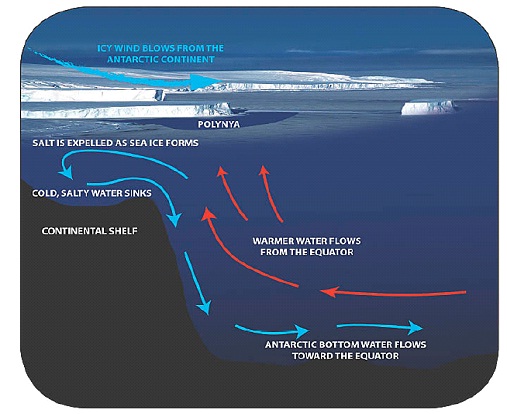
Extreme weather events can be seen as beginning in Antarctica. In situ work on ice-shelf cavities, as an example, feed directly back into weather models and test the validity and predictive value of the computer programs. Ice sheets lose mass at their boundaries which are generally where ice meets water along the leading edge and underneath the sheet itself – the cavity. As warm water enters the cavity, the sheets thin and are more vulnerable to fracture. But unlike a dental cavity, you can’t X-ray an ice sheet cavity. Gravitational measurements taken from aircraft, and ship based radio echo sounding and magnetic data help to map the relevant geography. This complex interaction of water and ice is the beginning of a deep river that cascades off the continental shelf and drives global ocean currents. So it is important to understand this interaction and to have models that predict what is observed on the ice.

Models must also explain the apparent inconsistencies that are so often picked up and paraded in public by politicians and talk show hosts. If global warming exists, why has the extent of winter sea ice around Antarctica been increasing? Recent extreme winters on the east coast of the United States have been used by politicians as evidence that global warming does not exist, and a significant portion of the population follows along.

There was a brief time when science captured the imagination of the world. From that moment when man walked on the moon, an entire generation was motivated to achieve the astounding. The benefits of the science, research and education that flowed from the Apollo missions can still be seen today in medicine, communications and computer and earth sciences. Because of its global impact, the next wave of imagination can be stimulated by Antarctic science.

watercirculationantarctica_zpsf3bce891

Water circulation – Antarctica.

Recent Posts

  • The Right to be Heard June 11, 2025
  • Julius Caesar, a Case of Realpolitik April 5, 2025
  • “Against stupidity, the gods themselves fight in vain.” December 6, 2023
  • A Harrowing Tale of Trash September 15, 2023
  • The Rubbish of Martin v. Boise August 5, 2023

Pages

  • About Richard Watson
  • Photographs

Archives

Unknown's avatar

Enter your email address to subscribe to this blog and receive notifications of new posts by email.

Join 117 other subscribers

Blog at WordPress.com.

  • Subscribe Subscribed
    • Richard Watson
    • Already have a WordPress.com account? Log in now.
    • Richard Watson
    • Subscribe Subscribed
    • Sign up
    • Log in
    • Report this content
    • View site in Reader
    • Manage subscriptions
    • Collapse this bar
 

Loading Comments...