• Antarctica
  • Book Reviews
  • Economics and Taxation
  • Photographs
  • Political Commentary
  • Running
  • Science
  • Short Stories
  • Travel
  • About Richard Watson

Richard Watson

~ Commentary

Richard Watson

Monthly Archives: December 2010

I May Have Won

24 Friday Dec 2010

Posted by Richard Watson in Political Commentary

≈ Leave a comment

As hard as it may be to believe in these austere times, my ship may have arrived. It appears I have won a legal settlement. As you see from the attached, I am entitled to $4, $8 or possibly even $10 in cash. You can imagine my excitement.

But as you may note on the attached, the lawyers get $5,368,000. Do you spot the problem with class action suits?

Happy Holidays!

 Class Action

The Mirror Up To Nature

08 Wednesday Dec 2010

Posted by Richard Watson in Political Commentary

≈ Leave a comment

In one of a series of passages in Hamlet where Shakespeare demonstrates his keen insight into acting and directing, the character of Hamlet instructs the players as follows:

Suit the action to the word, the word to the action, with this special observance, that you o’erstep not the modesty of nature. For anything so o’erdone is from the purpose of playing, whose end, both at the first and now, was and is to hold as ’twere, the mirror up to nature; to show virtue her feature, scorn her own image, and the very age and body of the time his form and pressure.

William Shakespeare, Hamlet, III, ii, 17 – 22

In a remarkable phenomenon that is playing itself out across the internet, Wikileaks has held its own “mirror up to nature.” Despite US government attempts to shut down the site (much like China did with Google), Wikileaks has established mirror sites across the globe. The number of mirrors is growing by the hundreds each day and as of this writing stands at 1,241. The mirrors can be accessed here.

A “mirror” is basically an exact copy of an internet site which is placed on another site. Not only does it provide for a backup copy of data, it also makes it difficult for governments to stifle or censor speech.

The decision of Paypal, Visa and MasterCard (but not, ironically, American Express) to stop any payment of funds to Wikileaks can be taken as evidence of US government interference, since even during wartime, commerce is often granted unfettered access to enemies and allies alike.

More to follow…

Ambition Should be Made of Sterner Stuff

04 Saturday Dec 2010

Posted by Richard Watson in Political Commentary

≈ 1 Comment

I’ve read some of the Wikileaks cables, and they are interesting in the sense that they portray the every day business of diplomacy. Perhaps the greatest revelation is that the “business” is rather ordinary, and not too dissimilar from what the rest of us experience. We all try to make sense of the world, and in doing so, our observations are sometimes colorfully insightful and sometimes groundless twaddle. World leaders should not be chaffed because someone happens to call them names. Besides, is there anyone who doesn’t already know that Italy’s Silvio Berlusconi is “feckless, vain, and ineffective as a modern European leader”? What is missing from the Wikileakers is a sense of context. Wikileaks provides mere data without analysis.

 The Daily Beast has provided the most astute analysis of the cables: “…you clearly see what the Wikileakers never expected: a United States seriously and professionally trying to solve the most dangerous problems in a frighteningly complicated world, yet lacking the power to dictate solutions.”

 Given the predictable response from the politicians (after all, you just have to read the cables to see how they think), it is worth quoting at length from the US Supreme Court case concerning the publication of the Pentagon Papers.

New York Times Co. v, United States, 403 U.S. 713 (1971)

 In seeking injunctions against these newspapers and in its presentation to the Court, the Executive Branch seems to have forgotten the essential purpose and history of the First Amendment. When the Constitution was adopted, many people strongly opposed it because the document contained no Bill of Rights to safeguard certain basic freedoms.  They especially feared that the new powers granted to a central government might be interpreted to permit the government to curtail freedom of religion, press, assembly, and speech. In response to an overwhelming public clamor, James Madison offered a series of amendments to satisfy citizens that these great liberties would remain safe and beyond the power of government to abridge. Madison proposed what later became the First Amendment in three parts, two of which are set out below, and one of which proclaimed: “The people shall not be deprived or abridged of their right to speak, to write, or to publish their sentiments; and the freedom of the press, as one of the great bulwarks of liberty, shall be inviolable.” The amendments were offered to curtail and restrict the general powers granted to the Executive, Legislative, and Judicial Branches two years before in the original Constitution. The Bill of Rights changed the original Constitution into a new charter under which no branch of government could abridge the people’s freedoms of press, speech, religion, and assembly…

The Government’s power to censor the press was abolished so that the press would remain forever free to censure the Government. The press was protected so that it could bare the secrets of government and inform the people. Only a free and unrestrained press can effectively expose deception in government. And paramount among the responsibilities of a free press is the duty to prevent any part of the government from deceiving the people and sending them off to distant lands to die of foreign fevers and foreign shot and shell…We are asked to hold that despite the First Amendment’s emphatic command, the Executive Branch, the Congress, and the Judiciary can make laws enjoining publication of current news and abridging freedom of the press in the name of “national security.” The Government does not even attempt to rely on any act of Congress. Instead it makes the bold and dangerously far-reaching contention that the courts should take it upon themselves to “make” a law abridging freedom of the press in the name of equity, presidential power and national security, even when the representatives of the people in Congress have adhered to the command of the First Amendment and refused to make such a law…

The word “security” is a broad, vague generality whose contours should not be invoked to abrogate the fundamental law embodied in the First Amendment. The guarding of military and diplomatic secrets at the expense of informed representative government provides no real security for our Republic. The Framers of the First Amendment, fully aware of both the need to defend a new nation and the abuses of the English and Colonial governments, sought to give this new society strength and security by providing that freedom of speech, press, religion, and assembly should not be abridged…

The greater the importance of safeguarding the community from incitements to the overthrow of our institutions by force and violence, the more imperative is the need to preserve inviolate the constitutional rights of free speech, free press and free assembly in order to maintain the opportunity for free political discussion, to the end that government may be responsive to the will of the people and that changes, if desired, may be obtained by peaceful means. Therein lies the security of the Republic, the very foundation of constitutional government.


Being Economical with the Truth

02 Thursday Dec 2010

Posted by Richard Watson in Economics and Taxation

≈ Leave a comment

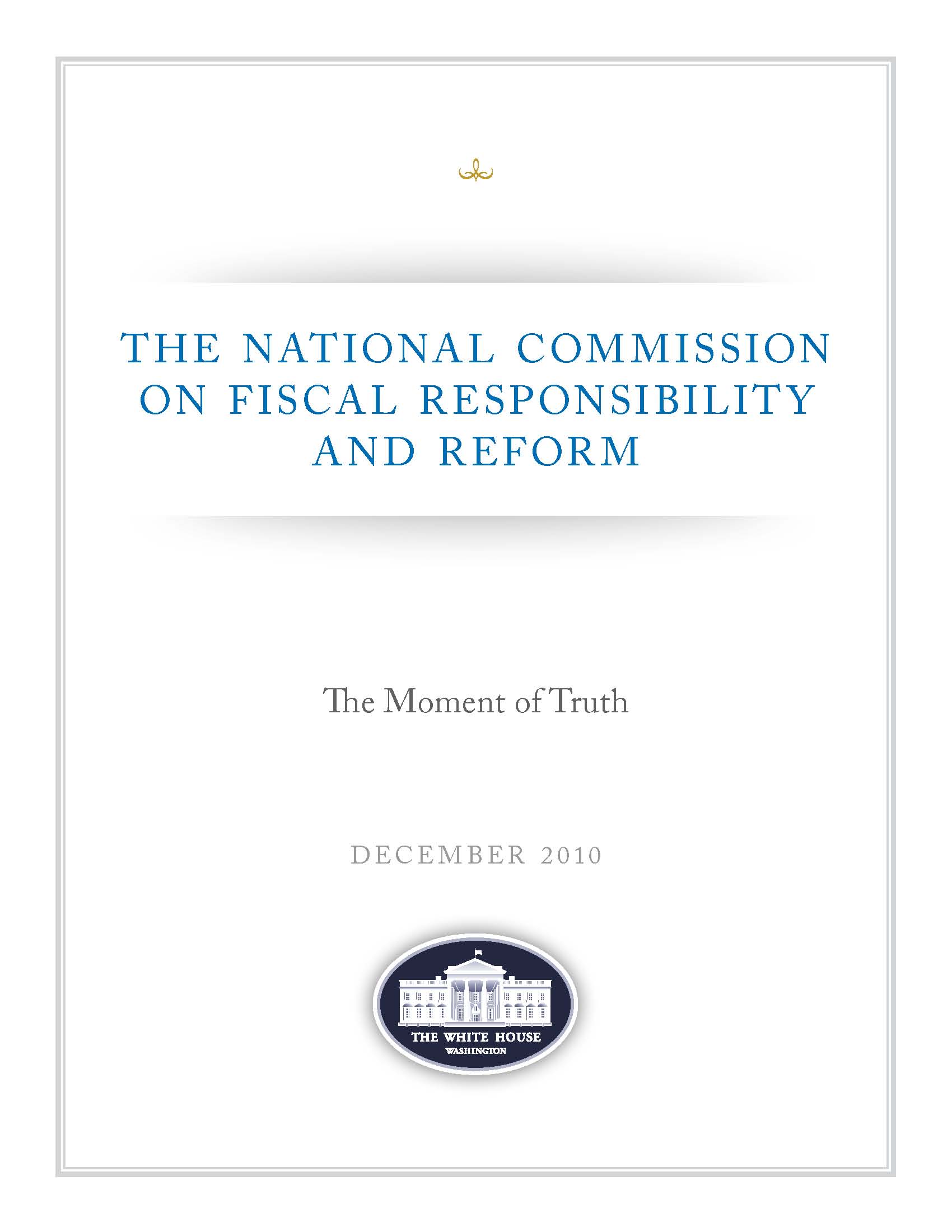
In Some Experiences of an Irish R.M., one of Mrs. Knox’s horses has gone missing and Major Yeates observes that her grandson, Flurry Knox. “…was not – to put it mildly – shrinking from that economy of truth that the situation required.” The President’s National Commission on Fiscal Responsibility and Reform is calling for a major tax overhaul in its delightfully titled report The Moment of Truth. The Commission is certainly not shrinking from its responsibilities.

The report proposes what is likely to be a massive tax cut for the very wealthy and a tax increase for the rest of us. Ideally, the Commission would like to see the highest individual tax rate set at 23%. It is currently 35%. The 35% rate applies to taxable incomes over $373,651. So, if your taxable income is $410,000, you would save $49,200 a year in income tax under the Commission’s proposals. Remember that prior to the Tax Reform Act of 1986 and the Reagan tax cuts, which were meant to simplify the tax code, the top individual tax rate was 50%.

When Irish Eyes are Smiling

In the eye of its economic storm, Ireland is stubbornly refusing to raise its corporate tax rate which sits unyieldingly at 12.5%, and has instead chosen to inflict economic pain on everyone else – with the exception of senior debt holders in Irish banks, who are being bailed out by taxpayers in the European Union. In solidarity with Ireland, our National Committee on Fiscal Responsibility and Reform (what George Orwell would have called the “Truth Commission”) would like to see the corporate income tax rate as low as 23%. The maximum corporate rate is currently 39%.

Meanwhile, the Commission is proposing that all itemized deductions for individuals be eliminated… More later once I have a chance to read through the report in detail.

Recent Posts

  • The Right to be Heard June 11, 2025
  • Julius Caesar, a Case of Realpolitik April 5, 2025
  • “Against stupidity, the gods themselves fight in vain.” December 6, 2023
  • A Harrowing Tale of Trash September 15, 2023
  • The Rubbish of Martin v. Boise August 5, 2023

Pages

  • About Richard Watson
  • Photographs

Archives

Unknown's avatar

Enter your email address to subscribe to this blog and receive notifications of new posts by email.

Join 117 other subscribers

Blog at WordPress.com.

  • Subscribe Subscribed
    • Richard Watson
    • Already have a WordPress.com account? Log in now.
    • Richard Watson
    • Subscribe Subscribed
    • Sign up
    • Log in
    • Report this content
    • View site in Reader
    • Manage subscriptions
    • Collapse this bar
 

Loading Comments...